Ticket to Ride Europe Online: The board game that has captivated players worldwide

Ticket to Ride Europe Online: The board game that has captivated players worldwide

You've probably heard of this game that's been a hit in game rooms for almost two decades. Ticket to Ride Europe isn't just a simple board game: it's a true institution for anyone who enjoys strategic challenges, fascinating maps, and the adrenaline rush of friendly competition.

But here's the real question you're asking yourself: how exactly does it work, and why do so many people keep coming back to it?

A railway game that has been crossing Europe for 20 years

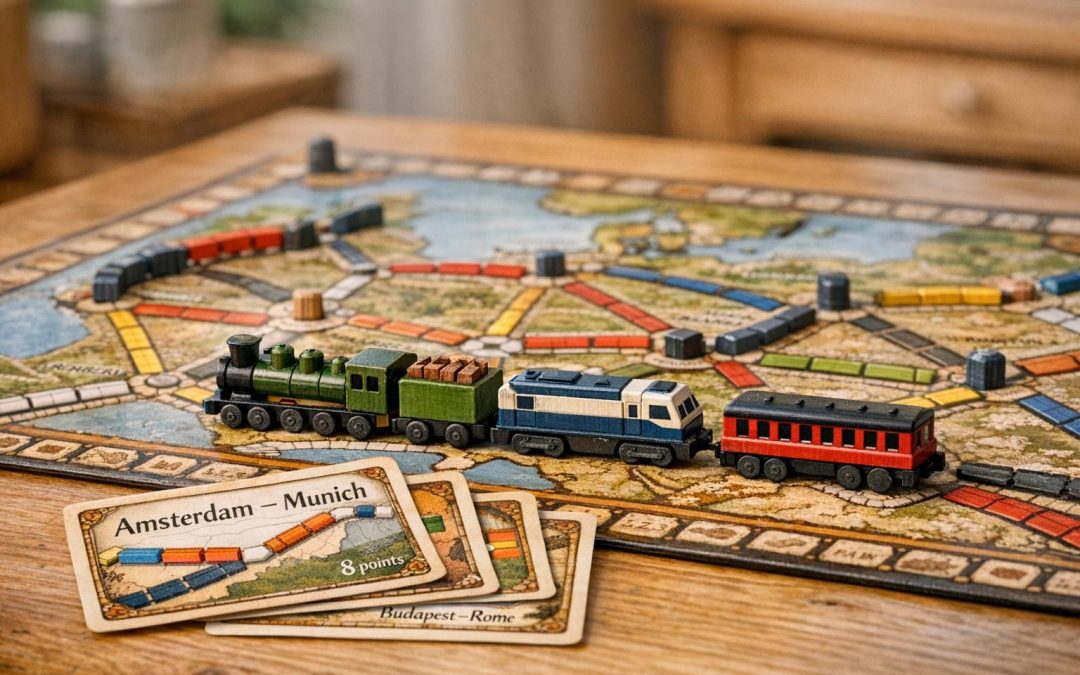
Ticket to Ride: Europe was born from a brilliant vision: to transform European rail journeys into a playful adventure. Created by Alan R. Moon, this board game redefined the genre by offering something innovative. Instead of complex battles or negotiations, you build railway routes on a beautifully illustrated map of the continent.

The concept seems simple at first glance, but that's precisely what makes it brilliant. Each player collects train cards to claim sections of track between European cities. Connect Prague to Warsaw, or Lisbon to Istanbul—it doesn't matter. Your goal: to score an impressive number of points by strategically linking destinations.

Since its first edition, the game has captivated millions of adventurers around the world. And unlike many board games, this one has managed to evolve without losing what makes it special.

How does a game of Ticket to Ride work?

Let's start with the basics. A game is for 2 to 5 players, ages 8 and up, and lasts about 30 to 60 minutes depending on your group. It's quick without being rushed, making it a perfect game for an evening with friends or family.

Here's how it works:

  • Each player starts with a hand of train car cards and a certain supply of train tokens.
  • On your turn, you can draw train cards, claim a route on the map, or draw secret destinations.
  • The wagon cards correspond to specific colors, and they must be combined to claim a route.
  • The longer a route is, the more cards it costs, but the more points it earns you.
  • At the end of the game, you tally your points: connected routes give you points, but uncompleted destinations deduct points.

It's the perfect tension between long-term strategy and short-term adaptation. You plan your routes, but your opponents are doing the same. That's where the intense pleasure of this game comes from.

The special mechanics that make this game unique

What truly sets this board game apart are the sophisticated mechanics that Alan R Moon and his studio have incorporated. In Europe, the game offers much more than simple straight-line routes.

You'll encounter tunnels that require more train cards than expected, creating strategic uncertainty. There are also ferries that require additional locomotives. And train stations allow you to modify your connection strategy mid-game.

Each element adds a layer of complexity without making the game cumbersome. It's a balance that few games manage to achieve.

Play online: the digital experience for ticket adventurers

If you'd like to play but finding local partners seems complicated, good news: the game is available in a digital version. Ticket to Ride Europe is available on the App Store , allowing you to challenge players online or play solo against AI-controlled opponents.

This digital adaptation retains the essence of the game: the same rules, the same map, the same tactical enjoyment. The interface is intuitive, and the application automatically handles scoring, which really speeds up the game.

This is especially useful if you want to understand how the game works before investing in a physical version. Or simply for playing when you can't get together around a table.

Extensions: expanding the world of European rail

Once you've mastered the basic rules, the game's universe opens up to you. Several expansions exist for Ticket to Ride, offering new cards, new characters, and bonus mechanics.

These additions transform the experience without complicating it. You can play with a new map of Europe, discover different objectives, or display your personalized scores. Each expansion enriches the game without altering its core essence.

If you enjoy the base game, the expansions give you a real reason to come back and play again and again.

Why this unanimous opinion among the players?

The reviews for this game are remarkably positive, and for good reason. First, it's a railway adventure game that blends accessibility with strategic depth. A child can grasp the rules, but an experienced player will find subtleties to explore.

Furthermore, it works with any number of players between 2 and 5. It's rare to find a board game that works really well regardless of the group size.

Finally, the games progress at a satisfying pace. You don't wait an hour for your turn. Every minute of play counts, and you remain engaged from beginning to end.

Ticket to Ride and the spirit of exploration

What truly thrills adventurers is the feeling of travel. Every route you trace on the map becomes real in your imagination. You're not just placing tokens; you're building a coherent railway network that connects real cities.

The map itself is a beautiful object. It depicts Europe with clarity, realistic distances, and a soothing aesthetic. By playing, you learn the geography of the continent effortlessly, almost like an adventure.

It's this immersive dimension that distinguishes this classic board game from other board games. You're not just a player accumulating an abstract number of points. You're an adventurer building a railway legacy across Europe.

Where to find the game and how to start

Ticket to Ride Europe is easy to find. The physical version is distributed by Asmodee and available in most board game stores. The official app is available digitally on the App Store.

If you're looking for honest recommendations before buying, check out the verified reviews. You'll quickly see that this game appeals to a wide range of audiences: children, couples, groups of friends, and passionate gamers.

The best game isn't necessarily the one with the most complex rules. It's the one that creates moments of shared enjoyment, healthy strategic tension, and a desire to play again. Ticket to Ride Europe ticks all these boxes.

L’itinéraire Mont Blanc ski de rando : guide complet pour réussir votre ascension

L’itinéraire Mont Blanc ski de rando : guide complet pour réussir votre ascension

Mont Blanc. Four thousand eight hundred and eight meters of rock, ice, and dreams. For many, it's the ultimate summit in the Alps. But for skiers, it's something else entirely: it's the promise of a descent that erases everything you've ever known.

Ski touring on Mont Blanc is not just a simple ski hike. It's a technical, demanding adventure where every decision counts. So before you set off, you need to understand what you're really getting into.

Why ski touring Mont Blanc changes everything

Skiing from the summit of Mont Blanc is an experience few get to enjoy. Not a groomed slope, not a ski school. A high-mountain route where you must read the terrain, anticipate hazards, and master your skiing on ever-changing slopes.

It's also very different from a traditional ascent on foot. With your skis and climbing skins, you save time and reduce muscle fatigue. But you also add a layer of complexity: managing your equipment, mastering the uphill technique, and above all, developing the skill to descend steep and exposed slopes.

Those who return from Mont Blanc on skis rarely talk about figures or meters of vertical gain. They talk about light, silence, the moment when the Alps unfold beneath you and you realize that you are truly at the highest point in Western Europe.

The classic route: from Plan de l'Aiguille to the summit

The most common starting point for a ski touring ascent of Mont Blanc is from the Plan de l'Aiguille , accessible by cable car from Chamonix. This is the strategic choice: you save on elevation gain at the start, you gain altitude quickly, and you arrive where the real adventure begins.

From there, the first day's route follows a simple but unforgiving logic. You first cross the Bossons Glacier, an area where crevasses demand vigilance. You then ascend to the Grands Mulets refuge, located at approximately 3,815 meters. This is your stop for the night, your base for the final push.

This refuge is the soul of this route. Perched on its rock amidst the ice, it is where you prepare your skis, check your equipment, sleep poorly (normal at this altitude) and get up at three or four in the morning for the ascent of the big day.

On the second day, you leave the refuge still in the dark. The route climbs steeply to the Grand Plateau, a vast white expanse that seems endless. It's magnificent and unsettling at the same time. No landmarks, no rock face to reassure you. Just you, your skis, and the whiteness.

From the Grand Plateau, you climb the Bosses ridge, the final slope before the summit. It's steep, narrow, and often windy. This is where technique really matters. And then, suddenly, you're there. At the summit of Mont Blanc.

The descent: the real question

Many believe that the descent is the reward. That's true. But it's also the moment when mistakes become dangerous.

You have two main options. The first is the direct north face: it's fast, it looks simple, but the wind slabs there are treacherous and can turn you into an unwilling passenger. The second is the corridors, a spectacular route with significant crevasses. Are you familiar with both? No? Then that's where a guide makes all the difference.

Most groups return via the same route: Grand Plateau, Bosses ridge in the opposite direction, then descent to the Grands Mulets refuge. Day three often consists of descending back to Chamonix, which may seem easy after two intense days, but where fatigue accumulates and accidents happen.

What level do you really need?

Let's be honest: this isn't an easy hike. Ski touring on Mont Blanc requires several things that not all skiers possess.

First, endurance. The elevation gain is significant: approximately 1,300 to 1,500 meters uphill each day for two days. It's a long way. Not dangerously long, but long. You have to enjoy cycling uphill.

Second, skiing technique. You don't need to be an off-piste specialist. But you must be comfortable skiing on slopes of 25 to 30 degrees, and be able to manage your skis in varying conditions (hard snow, crusty snow, powder). Descending Mont Blanc requires control, not virtuosity, but control.

Third, mountain experience. Crevasses are serious. You need to know how to rope up, what a crevasse is, and how not to panic if the ground collapses beneath you (it doesn't happen often if you're careful, but it does happen). This kind of experience isn't acquired overnight.

The actual level requiredThis means: red skiing, regular mountain hiking, and basic rope handling skills. If you meet these three criteria and are in good physical condition, you have a good chance. Otherwise, a guide becomes not only helpful but essential.

Choosing your guide: a real decision

Chamonix guides are not a luxury option. They are professionals, trained by the Compagnie des Guides de Chamonix, with serious certifications and years of experience in the high mountains.

A good guide reads the snow conditions, assesses avalanche risks, knows every crevasse on the Bossons Glacier (or nearly so), and above all, knows when to say no. Yes, there will be days when you show up at the Grands Mulets refuge and he announces that the conditions don't allow for the ascent. That's what a good guide is.

The cost varies, but expect to pay between 800 and 1,500 euros for a two-day guided trip. That's not insignificant. It also ensures that an experienced person will be monitoring your safety and that of the group.

The best season: when to go

Ski touring on Mont Blanc is mainly practiced from December to May. But “practicable” does not mean “optimal”.

March and April are generally considered the best times. The snow is more stable, the days are longer, and conditions are often more predictable. In January and February, you'll face long nights, intense cold, and sometimes unstable snow. In May, the avalanche risk increases, and the snow becomes slushy by the end of the day.

December can be magnificent or nightmarish depending on the year. It all depends on the snowpack. You really need a guide who knows the current conditions.

Equipment: what is non-negotiable

For this activity, your skis are not your piste skis. You need specialized skis: lighter, thinner, equipped with bindings compatible with a free heel offset for the ascent.

Climbing skins are mandatory. They attach to the bottom of your skis and provide exceptional grip on the ascent. Without them, you won't reach the summit of Mont Blanc on skis.

Next comes the safety equipment: harness, helmet, crampons, ice axe, rope. Yes, all three. Even when skiing, because there are sections where you take off your skis and have to proceed on foot over ice or rock. A pair of crampons can save your life on the Bosses ridge when conditions are harsh.

Clothing is classic but critical: merino or synthetic layers, a waterproof jacket, warm gloves (because at 4,800 meters, your hands will suffer), a hat, and sunglasses or goggles. The glare from the snow can blind you without protection.

Physical preparation: giving yourself the best chances

You don't need to be an athlete. But you do need cardio. Three to four months before your departure, start preparing your body: stair climbing, running, hiking with gradual elevation gain.

Acclimatizing to altitude is also important. If you're coming from sea level, going straight to 4,800 meters is a shock. Chamonix is at 1,000 meters. The Grands Mulets refuge is at 3,815 meters. Your body has about 18 to 24 hours to adapt between each altitude. It's not much, but it's better than nothing.

Many also do a reconnaissance day: they climb to the Plan de l'Aiguille, descend towards the Grands Mulets refuge, and then return. It's an excellent way to test your equipment and physical condition without the pressure of the summit.

The Europesurlefil experience: another vision of the mountains

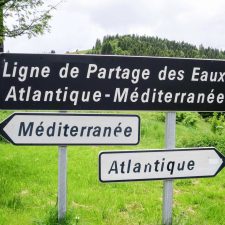
If you like the idea of following a geographical trail through the mountains, Europesurlefil , the European Continental Divide trail, offers a similar philosophy. It's a long-distance adventure that follows the watershed line through fifteen countries, by hiking, mountain biking, or skiing. Mont Blanc is a logical landmark, a true high point, but not the only one.

This broader approach to the mountain, where each activity creates a physical connection with the terrain, is exactly what skiers experience on Mont Blanc: a reading of the landscape, an intimacy with the geography, an understanding of the forces that shape the continent.

And after the summit?

Once you've descended, you realize you've experienced something. Not just reached a peak. You've spent two days and two nights above 3,800 meters, you've skied on glaciers, you've been close to crevasses, and you've seen the summit of Mont Blanc beneath your skis.

Many return with the same question: what now? There are other great peaks that offer ski touring: Monte Rosa, the Breithorn, the Dent Blanche. Each with its own personality, its own dangers, its own joys.

But Mont Blanc remains Mont Blanc. It's the one that calls to you first.

The best hiking destinations in Europe: where to go, how to choose

The best hiking destinations in Europe: where to go, how to choose

Do you dream of trails winding through legendary mountains, hidden villages tucked away in valleys, and breathtaking panoramas that justify every step? Europe offers something few continents possess: an extraordinary density of exceptional hikes, accessible and deeply rooted in vibrant cultures. From the frozen north of Norway to the Greek islands, the variety is breathtaking.

But here's the dilemma: where to begin when talking about hiking destinations in Europe? How to choose between the GR20 in Corsica and the Kungsleden in Sweden? Between a three-day trek and a two-week expedition?

Why Europe remains the best destination for long-distance hiking

Before recommending specific trails, it's important to understand what makes European hiking so special. It's not just about beautiful scenery, although that's obvious.

It's the unique balance between unspoiled nature and human infrastructure . You can hike for eight hours in a remote mountain, then sleep in a comfortable inn with panoramic views of the valley. Mountain villages in Europe aren't tourist museums; they're living places. People have been cooking, working, and living there for generations.

There's also the question of distance. The best hikes in Europe don't require a three-month expedition. A two-week trip allows you to cross several countries, following real trails with history, not just leisurely loops. This is an interesting contrast to other continents where long treks demand more time and logistics.

Finally, there's a dense network of marked trails, often maintained for decades. Even if you do get lost while hiking, you're never really lost for long. That's reassuring when you're exploring the unknown.

The classics: when we talk about hiking in Europe, where do we start?

There are trails that have become must-sees, almost obligatory. You may have already seen them on social media or in travel magazines. They deserve their reputation, but not for the reasons you might imagine.

The Tour du Mont-Blanc: the most famous hike

This legendary trek crosses France, Italy, and Switzerland around the Mont Blanc massif. Allow seven to ten days for the complete route, with stages of six to eight hours of walking. The views of Mont Blanc are, of course, spectacular, but what surprises hikers is the intimacy of the alpine landscapes: high-altitude lakes, mountain huts built into the mountainside, and Italian villages that appear after a challenging descent.

The departure point is Chamonix. The best time is June to September, when the snow has melted but before the tourist crowds of August.

The GR20 in Corsica: for ambitious hikers

This is perhaps one of the most challenging hikes in Europe. The GR20 crosses Corsica from north to south for approximately 180 kilometers, with an elevation gain that will deter many. Expect twelve to fifteen days of intense hiking, averaging six to eight hours per day, often on rocky and exposed terrain.

But hikers who have done it will tell you the same thing: it's justified. The Corsican mountain landscapes are raw, uncompromising, with a wild beauty found nowhere else in France. You are alone, or almost, with the trail and the silence.

The Chamonix-Zermatt Haute Route: for experienced mountain hikers

This route connects two legendary Alpine villages across high mountain passes, offering a complete immersion in the Alps. The trek takes an average of ten days, with stages lasting seven to eight hours. It's challenging, but the reward is a pure Alpine traverse, far from roads, almost entirely above 2,500 meters in altitude.

The lesser-known gems: before taking the beaten path

If you are looking to escape the crowds without sacrificing the quality of the scenery, here are some less crowded but equally remarkable hiking destinations in Europe.

Crossing the Carpathians in Romania

In the heart of the Romanian Carpathians, you'll find trails that offer an almost timeless experience. Romanian mountain villages still retain an authentic pastoral way of life. Hikes vary in difficulty, from easy to very challenging, and can last several days. The country's beauty lies in its contrasts: dense forests, open alpine meadows, and a fascinating mountain culture. It's a European hiking destination that remains accessible without being overcrowded.

The Seven Hanging Valleys Trail in the Algarve, Portugal

For something completely different, this Portuguese coastal trail offers a three- to five-day hike along dramatic cliffs and hidden beaches. The terrain is less technical than the GR20, but the atmosphere is just as stunning. You end each day's walk with a plunge into the Atlantic Ocean, which is not typical for a mountain hike.

The West Highland Way in Scotland

This is one of Britain's most popular trails, but that doesn't diminish its charm in the slightest. The six-day trek, from Glasgow to Fort William, traverses stunning Scottish moors, lochs, and rugged mountains. The weather is unpredictable, but that's part of the adventure. Small Scottish villages offer warm hospitality and pubs perfect for warming up after a day's walk.

How to choose your hike: the real questions to ask yourself

Before booking your trip, you must answer a few essential questions honestly.

What is your level of difficulty?

There's no shame in seeking out an easy or moderate hike. Difficulty doesn't determine the quality of the experience. A three-hour walk around Plitvice Lakes in Croatia offers spectacular water scenery without leaving you exhausted. Conversely, Kjeragbolten in Norway requires a certain level of fitness and confidence at altitude.

Be honest about your abilities: can you walk six hours a day for a week? Are you comfortable in exposed mountain terrain? Do you have experience with bivouacking or do you prefer mountain huts?

How much time do you have?

A three-day trip allows you to discover short but intense trails. A week opens the door to more demanding treks. Two weeks is the ideal time for long-distance treks. The more time you have, the more you can relax, let your body adapt, and enjoy the detours.

What type of landscape really appeals to you?

Do you prefer snow-capped peaks, alpine lakes, rocky coastlines, ancient forests, or flowery meadows? Each European hiking destination offers a different atmosphere. The Alps are not like the Balkans. Sweden is not Greece. This should guide your decision as much as the difficulty level.

What is the best time of year?

June to September covers most of the optimal conditions for mountain hiking in Europe. But each region has its own nuances. Norway opens its trails later, in July and August. The Mediterranean is wonderful from April to May and from September to October. Iceland has its short summer window in July and August.

A new perspective on cross-border hiking in Europe

One of the greatest advantages of hiking in Europe is the ability to cross borders on foot. You leave one country for a week, cross two others, and return to the first. These long-distance routes tell the story of the continent in a way that guidebooks simply can't.

This is precisely what Europesurlefil , the European Continental Divide Trail , explores: following the European watershed across 15 countries. This type of journey doesn't just showcase beautiful landscapes. It reveals how rivers, mountains, and cultures intertwine across Europe. It offers a different perspective on what it means to be a hiker in Europe: not just ticking off peaks on a list, but understanding the connections that bind the continent together.

Common mistakes to avoid

Before you set off, here's what experienced hikers would tell you after one or two bad experiences.

  • Never underestimate the weather. Even in summer, the European mountains can be hostile. Bring more layers than you think you'll need.
  • Don't set off without proper physical preparation. A week-long hike isn't the place to discover your limits. Train beforehand.
  • Don't try to do too much in too little time. A ten-hour walk sounds appealing on paper. It's exhausting in reality.
  • Don't start with the most difficult trek on the continent. Gradually build your experience and confidence.
  • Don't neglect acclimatization. If you are ascending to altitude quickly, give yourself a day or two to adapt.

In practice: the pre-departure checklist

Good preparation transforms a decent hike into a memorable experience. Make sure you've taken care of these details:

  • Detailed maps or a reliable GPS application downloaded offline.
  • Reservations at mountain huts or hostels, especially in high season.
  • Training adapted to the difficulty and distance of your chosen trail.
  • Travel insurance including mountain rescue.
  • Appropriate equipment: broken-in hiking boots, multi-layered clothing, rain protection.
  • Headlamp and external battery for phone.
  • Tent or sleeping bag if you are sleeping in an unfurnished mountain hut.

Europe offers an extraordinary wealth of hiking destinations, accessible and profoundly rewarding. Whether you're looking for a physical challenge or a contemplative stroll, there's a trail waiting for you.

Great European crossing: following the continent's watershed

Great European crossing: following the continent's watershed

Imagine an invisible line running through 15 countries, from Portugal to Romania, passing through the Alps, the Carpathians, and the Pyrenees. It's not a political border, but something deeper: the European Continental Divide, the hydrological backbone of Europe. This is the line followed by adventurers seeking an authentic European journey, far from the beaten tourist track.

But before you set off, you ask yourself the real questions: which route to take? How long will it take? What equipment should I bring? And above all, what makes this hike so different from other major crossings we know?

What defines a great European crossing?

A major European crossing is not just a long hike. It's an experience that immerses you in the physical geography of the continent itself. The European Continental Divide is the watershed: every drop of rain that falls on one side flows towards the Atlantic, on the other towards the Mediterranean or the Black Sea.

Unlike the Camino de Santiago or the Tour du Mont Blanc, which follow trails marked for centuries, this grand traverse is based on a natural logic. You follow the ridges, the passes, the watersheds that structure the European landscape. It's less a hike than an immersion in the very architecture of the continent .

Trekking and long-distance hiking have always existed in Europe, but they generally have a cultural or religious starting point (point A) and starting point (point B). The European Continental Divide, however, answers a fundamental geographical question: “What happens to this raindrop?”

The 15 countries crossed: a glimpse of the adventure

The great European Continental Divide crossing stretches over an exceptional distance across the continent. You start in Portugal or Spain, cross France, then head towards Germany, Austria, Slovakia, Romania, and many other countries. Each brings its own geography, culture, and specific challenges.

Here are the main segments of this great European crossing:

  • Spain and France : you are coming from the Pyrenees towards the Alps via the Massif Central
  • Switzerland, France and Italy : the Great Alpine Crossing (GTA), approximately 600 km from Thonon-les-Bains to Nice
  • Germany and Austria : the limestone and pre-alpine Alps
  • Slovakia and Poland The Tatra and Beskid Mountains
  • Romania The Carpathians, among the wildest in Europe

What strikes hikers undertaking this great crossing is the diversity of landscapes and routes. You don't do the same thing in France and Romania, nor on the same types of trails, nor in the same conditions.

How to prepare for your big European journey?

Let's get past the preparation hurdle. A major crossing of this magnitude is not a three-day hike. We're talking weeks, even months for those who want to do everything without a break.

Physical preparation This is non-negotiable. You will need endurance: days of 20 to 30 km in the mountains are not uncommon on this great crossing. Start three to six months in advance, alternating progressive trekking and trail running to strengthen your stabilizing muscles. High-altitude European trails demand strength and stability, not just cardiovascular endurance.

Next, the equipment . Unlike a simple multi-day hike, a long trek requires a well-planned pack. Lightweight, but sufficient. Consider bivouacking, food self-sufficiency, and the extreme weather that can occur in the mountains even in summer. Trails in Central and Eastern Europe are often less well-equipped than in France or Switzerland: guesthouses are less frequent, and mountain huts are rarer.

Route planning is also critical. Each section has its own characteristics:

  • The French Alps offer well-marked trails and regular mountain huts.
  • The Romanian Carpathians are wilder, with less infrastructure
  • The Pyrenees combine technical sections and exposed high-altitude areas.
  • The Massif Central offers an interesting transition between the Atlantic and the Mediterranean

You'll also need to decide on the type of hike: on foot (classic trekking), trail running for the more athletic, mountain biking or e-mountain biking for the less steep sections, or even bikepacking for certain stretches. The Great European Crossing adapts to your style.

The real challenges of a major European crossing

Let's be honest: this long trek is not an easy European tourist trail. You will encounter difficulties that a classic route avoids.

Navigation is an essential skill. Unlike the GR 5 (the “European Trail” linking Rotterdam to Nice over 2,600 km), which is very well-marked, some sections of the European Continental Divide require real navigation skills. You will need maps, GPS, and above all, the ability to use them in real-world conditions (fog, rain, night).

Isolation is a different reality. For much of the route, you'll be far from roads, villages, and rapid rescue. It's exciting, but it demands a certain degree of mental and physical self-sufficiency. Mountain huts aren't everywhere, contrary to what one might imagine on European hikes.

Meteorological variability It's brutal. In the mountains, summer offers no guarantees. You might set off under sunny skies in the morning and face fog and strong winds in the afternoon. Your clothing must be suitable for all scenarios, and your itinerary must remain flexible.

Finally, the administrative aspect should not be overlooked. Fifteen countries means potentially fifteen different sets of regulations concerning land access, camping, and seasonal restrictions. Before you leave, check the local rules.

Why the European Continental Divide rather than another route?

You already know the classics: the Way of St. James (a spiritual pilgrimage), the Great Crossing of the Vosges (430 km, more accessible), the Tour du Mont-Blanc (a famous and very popular circuit), the GR 20 in Corsica (a short alpine hike), or even the High Route of the Lost which crosses Spain and France.

The European Continental Divide offers something radically different: a natural rather than a historical or cultural logic. You're not following a pilgrimage route, you're following the physical geography of the continent. It's less culturally "marked out," but infinitely deeper.

For those who love to understand how the world truly works, who want to see how water organizes itself, how landscapes transform according to altitude and slope, this great European crossing is unparalleled. You cross not political borders, but hydrological, climatic, and ecological thresholds.

The seasons: when to embark on a long journey?

The timing is not insignificant on a major journey through 15 countries crossing mountains.

Summer June to September is the classic hiking season. Trails are clear, mountain huts are open, and the weather is more predictable (although thunderstorms are still frequent in the mountains). However, July and August see an influx of hikers. If you're looking for solitude, aim for June or September.

Spring (May) is interesting but risky: high-altitude passes can be snow-covered, not all mountain huts are open, and the weather is extremely variable. Recommended only for experienced hikers.

Autumn (September-October) offers magnificent scenery (the Alps turn golden) but the days shorten rapidly. After October, the first snows arrive, making hiking impossible for most sections.

Winter is not an option for a classic hike, unless you are an experienced mountaineer or specialize in ski touring.

Multi-activities: hiking, but not only

A major European crossing is not monolithic. Depending on your abilities and the sections you choose, you can combine several activities. Trekking remains the classic option, but the major crossing also adapts to:

  • Trail running for the less technical sections
  • Mountain biking or e-mountain biking on forest paths and wide tracks
  • Bikepacking for those who want to combine cycling and camping
  • Ski touring (specific routes in spring/winter)

This flexibility is precisely one of the attractions of this great crossing: it does not impose a single mode of transport, unlike the majority of European trails. You are free to choose.

The true cost of a major European crossing

Let's talk money frankly. A long journey lasting several months requires a real budget.

Mountain huts and guesthouses range from €20 to €80 per night depending on the country. Wild camping (where permitted) will save you money. Food is a significant expense: budget €30 to €50 per day depending on your strategy (buying supplies in town vs. self-sufficiency).

Even before you leave: new equipment (tent, backpack, shoes, technical clothing) can cost between 2,000 and 4,000 euros for a complete initial setup. But if you've already done some hiking, you probably already have the essentials.

Transportation to and from the starting point, flights between countries, and specialized insurance for this long-distance crossing complicate the budget equation. Expect to pay at least €4,000 to €8,000 for a complete two-month crossing, including food and accommodation, but excluding equipment.

The philosophy of adventure: why really undertake this great crossing?

Beyond statistics on distance, duration and budget, the real question is: why embark on a major European crossing?

Because it connects you to the continent on a profound level. You understand how water flows, how landscapes are organized, how cultures intertwine with geography. You sleep beside a river that will eventually flow into the Atlantic or the Mediterranean. You cross thresholds that have separated civilizations for millennia.

It's a form of hiking and trekking that enriches, that changes the way you look at a map or a landscape for the rest of your life.

Trekking destinations in Europe: how to choose your next mountain adventure

Trekking destinations in Europe: how to choose your next mountain adventure

You've been scrolling through social media for an hour, paralyzed by the choices. Iceland or the Alps? A three-day trek or a two-week expedition? Alone or in a group? The truth is, Europe offers so many possibilities that sometimes you end up not choosing anything at all. But here's the thing: trekking in Europe isn't just about a list of "most beautiful trails." It's a much more personal question: what truly draws you to the mountains?

Why Europe has become the ultimate destination for hikers

Something has changed in the last ten years. Europe is no longer seen as "plan B" when the Himalayas or Patagonia are not an option. It has become a trekking destination in its own right, with its own logic, charms and challenges.

It's simple: Europe boasts a remarkable density of diverse landscapes within a reasonable distance . You go hiking in the Northern Alps of France, cross Italy in ten days, and finish in Switzerland. Three countries, three distinct worlds, one single mountain range. Where else can you find that?

There's also the practical aspect. Trekking trails in Europe are marked, maintained, and designed to accommodate hikers. Mountain huts are available. Villages are rarely more than a day's walk away. If you have to turn back for medical reasons, you're never truly isolated. It's trekking with an invisible safety net, and that's a considerable advantage for beginners or families.

And then there's the culture. Every mountain in Europe tells a story. The Alps aren't just a geological chain; they're an arc that cuts through the Alpine sensibilities of France, Switzerland, Italy, and Austria. Each slope has its own distinct character. That's what makes a trip to Europe so enriching.

The classics: where to begin

If this is your first real mountain expedition, some routes come up again and again for one simple reason: they work.

The Tour du Mont Blanc This is the perfect example. This 165km trek crosses France, Italy, and Switzerland in approximately 10 to 12 days. The required physical level is moderate if you are used to regular hiking. The infrastructure is near perfect: mountain huts every day, exemplary trail markings, and scenery that justifies every effort. It's a classic for a reason: because it actually works.

Next comes the choice of style. Do you prefer something wilder, less crowded? Consider the Dolomites in Italy, with their orange rock towers that look like they've been plucked straight from a fantasy film. Or perhaps the Tatra Mountains trek between Slovakia and Poland, a more secluded but equally spectacular option. The duration varies between 5 and 8 days depending on your pace.

For a less strenuous but equally rewarding hike, the West Highland Way in Scotland offers 96 km of pure British scenery, doable in 5 to 7 days. The difficulty level is truly moderate. It's ideal if you want to prove to yourself that you're capable of a long hike without pushing yourself to the limit on monstrous elevation gains.

Understanding your own level: the real question

Here's what no one really dares to say: most people overestimate their physical abilities in the mountains. They compare themselves to friends who "do sports," and bam, they think they're capable. Except that climbing 1,000 meters of elevation gain six days in a row is something else entirely than three gym sessions a week.

The level of difficulty in trekking depends on three variables: your actual cardiorespiratory fitness (not your couch potato physique), your acclimatization to the mountains, and the duration you can sustain. A moderate mountain trek involves 5 to 6 hours of walking per day with limited elevation gain (500 to 800 meters). That's already much more than it sounds.

Here's a genuine test: can you hike for four hours on flat terrain without experiencing intense pain? If so, you can start. If not, train first. It sounds silly, but it's the difference between an unforgettable trek and three days of suffering before giving up.

Duration and period: two inseparable parameters

When choosing your trek in Europe, two questions come up: how many days do you really have? And when can you leave?

The duration isn't simply a matter of the number of days available. Having two weeks isn't necessarily better than ten. Two weeks allows for a longer route, yes, but also a less stressful pace. You expend less mental energy managing fatigue. A week of maximum effort is harder to handle psychologically. Ten days is often the sweet spot.

As for the timing, it makes all the difference. September in Europe is generally perfect: the summer tourist season is over, the mountain huts are still open, and the weather is (more or less) stable. July and August offer more comfort but also more crowds and higher prices. May and June are also excellent if you accept that high-altitude huts may still be closed on some routes.

Avoid hiking in the mountains in October unless you really know what you're doing. The rain sets in, the mountain huts start closing, and daylight fades early. It's not impossible, but it's more demanding.

Whether you're traveling solo, as a couple, or in a group: what really changes with the company

Going on a trek alone is a philosophical experience. Going in a group is a social experience. They are not at all the same adventure.

Going solo, you move at your own pace. You have no compromises. The trail becomes your personal conversation with the mountain. It's intense. It's also, for some, a little lonely around day 6.

Traveling in a group with a professional guide offers increased safety, local expertise, and shared experiences. Mountain huts are pre-booked, and risks are minimized. For a trek in Europe, especially if it's your first expedition, joining a guided group isn't a luxury; it's often the most sensible option.

Whether you're a couple or a small group of friends, it's the best of both worlds if you're well-matched in terms of skill level and pace. Otherwise, beware: nothing destroys a friendship like spending twelve hours straight with someone incompatible in the mountains.

The route: classic or off the beaten track

There are two schools of thought. Those who follow an established and well-documented route (Tour du Mont Blanc, Grande Traversée des Lofoten in Norway, etc.), and those who build something more personal.

The classic routes exist for a reason: they work. The mountain huts are ready. Other hikers can offer advice. If you have to turn back, it's possible without disaster. For a first serious hike, it's honestly the smartest route.

But if you have one or two successful treks under your belt, creating your own itinerary becomes both possible and exciting. Imagine: linking three valleys in the Massif Central, or connecting the peaks of the Alps in an original way, or exploring a lesser-known mountain range in Spain or Greece. It requires more preparation, a better knowledge of the mountains, and a group capable of improvising. But a trip you create yourself always stays in your memory longer.

The real questions before starting

Before clicking "book," ask yourself these questions honestly:

  • Can I really sustain a daily physical effort for 5 to 10 days in a row?
  • What period of time truly suits me without compromising on work or private life?
  • Do I already have experience in the mountains, or is this all new to me?
  • What is my actual budget? (Refuges aren't free, nor are flights.)
  • Am I able to adapt if the weather turns bad?
  • Why am I really doing this? (The answer "because it's beautiful" is valid. "Because everyone else is doing it" is less so.)

Answer honestly, and your choice of trekking destination in Europe will become obvious.

Prepare your body and mind

Two months before your departure, start training seriously. Not just "doing a little exercise." I'm talking about weekly hikes with elevation gain, weighted stair climbs, and long walks. Your body needs to know what to expect. That's the difference between a successful trek and six days of suffering.

Mentally, prepare yourself for boredom. The mountains aren't always spectacular. There are gray days, stages where the trail is monotonous, moments when fatigue sets in. That's normal. It's often where the real transformation begins. The most beautiful treks in Europe are only beautiful because they were earned through sweat, not because they were seen on Instagram.

Invest in good shoes. A good tent. A good backpack. It's not a luxury: it's the difference between sleeping and not sleeping, walking and suffering. On a ten-day trek, comfort is not an understatement.

Europe: a continent of possible treks

What makes trekking in Europe so rewarding is the variety. You can hike in the Northern Alps in France or Switzerland. You can trek across Italy through the Dolomites. You can explore the Lofoten mountain range in Norway. You can trek down to Greece, Spain, or Portugal. Each region offers its own level of difficulty, its own atmosphere, and its own schedule.

Europe is not a monolithic destination for trekking. It's a continent. And that's precisely what makes it so interesting: you can come back ten times and discover ten completely different mountains .

Europe on the wireThe European Continental Divide trail explores precisely this richness: following the European watershed for over 10,000 km allows you to understand Europe through its mountains and rivers. It's another way of seeing the continent, of course. But it reveals something you'll never see on a typical trek: how everything in Europe is interconnected.

Men's mountain biking in Munich: the best routes for exploring Bavaria by bike

Men's mountain biking in Munich: the best routes for exploring Bavaria by bike

Munich isn't just a city of beer and Bavarian tradition. It's also a gateway to exceptional mountain biking territory, where the line between urban and wild quickly disappears as soon as you hop on your bike. If you're looking to explore Munich and its surroundings on two wheels, you've come to the right place.

Men's mountain biking in Munich is an experience that blends exploring the city with mountain adventure. And contrary to what you might think, you don't need to ride for hours to find interesting routes. Some of the best trails start right in the city center.

Munich by bike: why it's the ideal spot for mountain biking

Munich boasts an outstanding cycling infrastructure. The city has over 1,200 kilometers of cycle paths, making it one of the most cyclist-friendly cities in Europe. But what makes Munich truly appealing for men's mountain biking is its geographical location.

The Bavarian capital lies at the confluence of several worlds: you have the city itself, urban parks like the Englischer Garten (English Garden), and just beyond, the Bavarian Alps with the Isar River winding its way through the landscape. This variety is exactly what mountain biking enthusiasts are looking for: diversity, accessibility, and real challenges.

The Isar, in particular, offers a remarkable route for cycling. This river shapes the landscapes and offers opportunities for long rides without being exhausting, even for those of moderate fitness.

The Isar-tour route: the unmissable classic

If you're starting out in mountain biking in Munich, the Isar Tour is the logical starting point. This route follows the banks of the Isar River for approximately 80 kilometers, with sections perfectly suited to all skill levels. For a first ride, you could focus on the stretch between Munich and Bad Tölz, a roughly 10-kilometer experience that remains accessible.

What cyclists really appreciate is that the route is mostly flat , well-maintained, and offers authentic Bavarian scenery: forests, small villages, and meadows. No surprising elevation changes, no technical difficulties. Just cycling for those in good, normal physical condition.

And if you have an electric mountain bike, an e-MTB becomes a real asset for exploring longer sections without excessive fatigue. Several bike rental companies in Munich offer e-MTBs as an option, with free delivery to your starting point.

More technical courses: for those who want to progress

If the Isar tour seems too easy, the region offers excellent alternatives with more elevation gain and technical challenges. The Bavarian Alps begin just 50 kilometers south of Munich, and mountain biking parks are multiplying in this area.

The routes around Benediktbeuern and Lenggries offer moderate to difficult terrain, with significant elevation changes and technical sections that demand a good level of fitness. The region's website features a detailed map of these routes, along with comments from other cyclists for each one.

These routes vary between 20 and 50 kilometers, with durations of 2 to 4 hours depending on your pace. The same goes for the experience: it differs depending on whether you ride in a straight line or take the time to explore every little detail of the Bavarian forest.

Men's mountain biking in Munich: where to buy or rent your equipment

Don't yet own your own mountain bike, or prefer not to transport yours? Munich offers several reliable rental locations.

  • Centrally located car rental companies near the train station allow free cancellation if you change your mind after reviewing the terms and conditions.
  • Specialist shops offer expert advice to help you choose a men's mountain bike suited to your needs (leisure, trail, bikepacking).
  • Free delivery options to your hotel or starting point reduce access friction.

If you are looking to buy rather than rent, German brands dominate the market in Munich, which means competitive prices and excellent after-sales service.

The English Garden: the urban park worth a visit

Before leaving the city for the countryside, don't miss the Englischer Garten. This park is an oasis within Munich itself, and its network of cycle paths allows for a 2- to 3-hour ride without ever leaving the urban atmosphere. Even this short experience will change your perception of the city by bike.

The English Garden also offers rest areas, cafes, and the chance to meet locals doing the same thing as you. It's a good introduction before heading out on the longer, more rugged routes towards the Alps.

Difficulty levels: how to choose your first course

The first question every male mountain biker asks in Munich is: “Is this route right for me?” Here’s how to register and understand the difficulty levels.

Level Physical fitness required Elevation difference Examples in Munich
Easy Moderate Less than 300 m Isar-tower (central section), Englischer Garten
Moderate Good 300 to 800 m Sections towards Bad Tölz, local circuits
Difficult Excellent Over 800 m Alpine trails around Lenggries

Most cyclists start with the easy level, even if they are in good physical condition. The reason: you get to know the terrain, test your equipment, and understand your own pace in Munich before tackling bigger challenges.

Essential accessories for mountain biking in Munich

With the right gear, every bike ride becomes more enjoyable. Here are the truly essential accessories, not the ones they try to sell you through marketing.

  • A helmet: it's mandatory in Germany for minors, recommended for all ages.
  • Tires suited to the terrain: Bavarian roads can be muddy after rain
  • A map or a GPS app: navigating with a mobile device changes the safety of the experience
  • A basic repair kit: sooner or later, a puncture happens even on the best trails.
  • Water and a few energy bars: for long journeys, this is non-negotiable.

Don't overload. Minimalism is your friend on a bike.

The international benchmark: the 2022 European Championships

Munich hosted the European Mountain Bike Championships in August 2022, and it was a landmark event. Tom Pidcock won in 1 hour, 18 minutes, and 9 seconds, ahead of Sebastian Carstensen and Filippo Colombo on an artificial course specially designed for the competition. This event highlighted Munich as a serious mountain biking destination, not just a tourist stopover.

Tom Pidcock won the men's race at the 2022 European Championships in 1h18m09s.

What's interesting for you is that the infrastructure created for this event remains accessible to amateur cyclists. Even if you're not at the level of European champions, you can use the same areas and understand what makes Munich so attractive for mountain biking internationally.

Summer in Munich: the best season for cycling

Summer is when Munich truly shines for mountain biking. The weather is stable, the days are long, and the trails are in excellent condition. June to September is your ideal time to go.

Be aware, however, that July and August see the peak tourist season. If you prefer a quieter experience, June or September offer similar conditions with fewer people on popular routes.

Navigator in Munich's Old Town by bike

If you start in Munich, you'll pass through the old town. Navigating the historic streets by bike requires a bit of caution, but it's doable. Pedestrian streets exist, but many lanes are open to cyclists.

Helpful tip: Displaying the address in the local language (German) on your GPS device makes navigation more intuitive. German street names make sense once you understand them.

From the Old Town, you have several direct routes to the English Garden or to the starting points of the long tours. The same line that divides European waters along the European Continental Divide also traces a certain logic in the flow of nature. In Munich , it's the same: the cycle paths naturally follow the topography and waterways.

Physical fitness and mental preparation

Before you set off, be honest with yourself about your current fitness level. A moderate route doesn't have to be boring. It's often a moderate route that you've mastered and thoroughly enjoyed.

Start with an easy route. Go all the way without getting exhausted. Come back enthusiastic, not worn out. It's this initial positivity that creates the desire to return and progress towards bigger challenges.

The most beautiful hikes in Europe: a practical guide to choosing your next adventure

The most beautiful hikes in Europe: a practical guide to choosing your next adventure

Do you dream of hiking through breathtaking landscapes, but don't know where to start? Europe offers an impressive array of trails, from Portugal to Switzerland, from the Romanian Carpathians to the Mediterranean coast. The real challenge isn't finding a hike in Europe, it's choosing from the hundreds of options available.

Why hiking in Europe has become essential

Hiking in Europe isn't limited to the mountain trails you might be familiar with. An entire continent awaits walkers, with routes ranging from a few hours to multi-week treks. European trails are remarkably well-marked, accessible, and diverse. You could be traversing ancient forests in Romania one day, hiking in the Swiss Alps the next, or exploring the rugged coastlines of Portugal.

What makes hiking in Europe special is the proximity of cultures. Unlike major treks in Asia or Africa, you're rarely far from a village, a mountain hut, or a small inn. This means more flexibility, less complex logistics, and above all, the opportunity to truly discover the local heritage.

The European Ramblers' Federation (ERA) has been working for years to maintain and develop a network of high-quality trails across countries. This collective commitment means that hikers find exceptional conditions for walking in Europe.

The great classics you need to know

Some trails have become globally recognized landmarks. They attract thousands of walkers every year, and for good reason.

The E4 European Long-Distance Trail deserves special mention: it stretches from Portugal to Cyprus, offering a unique continental journey. It is the longest long-distance hiking trail in Europe, and following even a section of this great path immerses you in a genuine cross-border adventure.

In France, the GR20 in Corsica remains an absolute benchmark for those seeking an intense mountain trek. Expect to spend between 15 and 20 days hiking to cross the island from north to south, with challenging conditions that demand good physical preparation.

In Switzerland, the Haute Route Chamonix-Zermatt is a legendary route that crosses the Alps. It's a demanding alpine hike, but the mountain scenery justifies every effort.

In Italy, the Cinque Terre captivate tens of thousands of visitors each year. Trekking between the five coastal villages offers a unique experience: you walk among terraced vineyards, colorful little harbors, and turquoise waters. The hike is short (allow 4 to 5 hours for the complete route), making it an ideal option for hikers of all levels.

Scotland offers the West Highland Way , a legendary 96-kilometer trail traversing the Highlands. This 8-day trek combines mountains, glacial lochs, and quintessential Scottish wilderness. The path is well-maintained and offers a moderate level of difficulty, accessible to most hikers in reasonable physical condition.

How to choose your hike according to your preferences

Before booking, ask yourself a few simple questions.

How long do you have? One day, one week, three weeks? The answer is key. If you only have two or three days, focus on specific routes like the Cinque Terre in Italy or a section of the Plitvice Lakes in Croatia. If you have two weeks, you can consider a real trek like the French GR20 or the Franco-Swiss-Italian Tour du Mont Blanc.

What type of landscape appeals to you? European trails offer an extraordinary range: high alpine mountains, dense forests, Mediterranean coasts, and plateaus. Do you prefer challenging mountain terrain or quieter valley paths? Dramatic landscapes or more accessible routes? This clarity helps you quickly eliminate the wrong choices.

What is your physical condition? Be honest with yourself. An alpine hike requires different preparation and endurance than a coastal walk. In Europe, there are options for all levels: from the Camino de Santiago (accessible, spiritual) to high-altitude treks in Switzerland or Austria (requiring excellent fitness and experience).

What time of year? Europe offers hiking in every season. Spring and autumn are generally the best times for most routes: pleasant temperatures, fewer people on the trails, and magnificent scenery. In summer, some mountain trails can be overcrowded. In winter, only hikes at lower altitudes remain accessible.

Hidden treasures beyond the big names

Of course, beyond the famous trails there is an immense wealth of lesser-known but equally remarkable paths.

The Rota Vicentina in Portugal offers a sublime alternative to tourist trails: it's a series of coastal and mountain paths in southwest Portugal, with wild and sparsely populated landscapes. The trek requires a good level of fitness, but hikers who undertake it often describe it as a truly transformative experience.

In the heart of the Romanian Carpathians, you'll discover pristine forests and secluded valleys. This is authentic Europe, far from the crowds. Hiking in the Rodna Mountains or around the Mont Blanc region of Romania offers a complete immersion in unspoiled nature and vibrant traditional cultures.

In Spain, the lighthouse trail along the coast offers a multi-day coastal hike with spectacular views and an authentic Mediterranean atmosphere.

Finland offers the Bear Circuit , a multi-day circular trek through boreal forests and Finnish lakes, providing a unique Nordic nature experience in Europe.

Practical information you really need to know

A few concrete details that make the difference between a successful hike and a frustrating experience.

Most trails in Europe are well-marked and documented. Guidebooks are available online or at tourist offices. You'll find detailed maps, information on duration, difficulty, and elevation gain for almost every route.

The infrastructure for accommodation varies from country to country. In France, Switzerland, and Austria, the network of mountain huts is extensive and reliable. In the Romanian Carpathians or Portugal, you may sometimes need to be more self-reliant or plan your accommodation in advance. This requires a bit more preparation, but it's also what makes these destinations less crowded.

Safety is excellent in Europe. Trails are generally well-maintained. However, be aware of the mountains: changeable weather, loose rock, and exposure at altitude. For high-altitude treks (Tour du Mont Blanc, Haute Route Chamonix-Zermatt), prior experience and thorough preparation are essential.

Regarding timing, allow time for acclimatization if you are going to high altitude. An arrival day without strenuous activity is always advisable, especially above 2500 meters.

Also think about what to do after the hike.

One detail often overlooked during planning: the post-trek period is just as important as the trip itself. After an intense hike, your body needs to recover. Planning an extra night or two to rest in a village, explore the local area, eat local food, and truly absorb the experience makes all the difference.

It's in these quiet moments, sitting in front of a coffee in a small Alpine or coastal village, that hiking takes on its full meaning. You're no longer in objective mode; you're simply there, present, with the landscapes and the local people.

An entire continent awaits you

Hiking in Europe ultimately teaches you that you don't need to travel to the other side of the world to experience a real adventure. A Swiss mountain, a Romanian valley, a Portuguese coast, a Scottish forest: each trail tells a story of geology, culture, and human history.

Start small if you're a beginner. Try a day hike in France or Italy. Then, if you've caught the hiking bug, embark on a multi-day trek in Switzerland or the Carpathians. Hiking in Europe is about learning to read the landscape, understanding how water shapes the mountains, and how the valleys tell the stories of the people who live there.

Rail Express Europe game: the complete guide to mastering this fast-paced version of Ticket to Ride

Rail Express Europe game: the complete guide to mastering this fast-paced version of Ticket to Ride

Have you heard of Ticket to Ride but don't know where to start? Or are you already familiar with the classic game and looking for a more dynamic version? Rail Express Europe might be just what you need. It's an adaptation designed for players who want fun without spending two hours around the board.

What exactly is Rail Express Europe?

Let's start by clarifying what you're holding in your hands. Ticket to Ride Express isn't a completely new game, but an optimized version of the original concept created by Alan R. Moon. The game board represents early 20th-century Europe, with its iconic cities and railway lines connecting the continent's major metropolises.

The big difference? This version is tailor-made for 2 to 4 players aged 8 and up. It's more fluid, faster-paced, and captures the essence of the game without the drawn-out sections. For those familiar with Europesurlefil , the game about tracing the European Continental Divide, this European geography resonates in a different way: the game also traces the path of human connections across the continent, simply on a piece of cardboard instead of a real playing field.

How does this game work? The essential rules

The mechanics are straightforward and addictive. Your objective as a player is to collect train cards to control the railway routes between cities. You have 120 wooden train cars at your disposal, divided among the players. Each turn, you can do three things: draw train cards, place your train cars on a route, or draw a new destination card which gives you a new mission to complete.

The game board shows a map of Europe with pre-drawn routes. To control a route between two stations, you must play the exact number of train cards corresponding to the length of that railway line. The longer the route, the more points you accumulate at the end of the game. But beware: if an opponent completes the same route before you, you lose your opportunity. This is where strategy comes into play.

The locomotive cards are your wild cards. They can replace any color, which can be decisive in critical moments of the game.

What makes this version special: the Europe-Express bonus rule

Here's one element that truly sets this edition apart. One of the bonus rules involves connecting London and Istanbul continuously with a single color . If you succeed in this ambitious challenge, you'll score maximum points. It's the kind of strategic gamble that creates memorable moments around the table: will you risk concentrating all your efforts on this mythical line, or play it safe by making smaller conquests?

The game includes 4 special Europe-Express bonus cards that reward players bold enough to attempt these long and difficult connections.

Box contents: what you actually get

The box contains everything you need to play immediately:

  • 1 game board representing a map of Europe
  • 120 wooden wagons plus replacement wagons
  • 4 score markers to track your progress
  • 70 wagon cards divided into 10 different colors
  • 12 locomotive cards (the precious wild cards)
  • 30 destination maps that assign you your missions
  • 4 Europe-Express bonus cards
  • 1 complete and well-structured rulebook

The build quality is solid. The wooden wagons have a nice weight to them, the board is easy to read, and the cards are pleasant to handle. It's the kind of game you want to play regularly because the physical experience is so satisfying.

Game duration: what to expect

This is a key point for many players. Unlike the classic version, which can stretch to two hours, a game of Rail Express Europe typically lasts between 30 and 45 minutes. Long enough for real strategy and interesting stakes, yet short enough for a quick game after dinner or to fit into a family evening. This is precisely what makes this version so successful.

Reviews and reputation: what players are really saying

The consensus is clear: it's a fun and easy-to-learn family game. Children as young as 8 can grasp it in two rounds. Adults appreciate the tactical depth despite the simplicity of the rules. On social media platforms like YouTube, content about the game regularly showcases dynamic gameplay and laughter around the board.

The strengths, according to feedback, include the short playing time, high replayability thanks to the variable destination cards, and constant interaction between players. The weaknesses mentioned include less strategic depth than the full version, and a board that can sometimes feel a bit cramped for four players, especially with the intense race for the best routes.

Are there other versions of the game?

Yes, and it's important to know this before buying. The Ticket to Ride franchise offers several expansions and variations. The main versions include:

  • Ticket to Ride Europe (the classic, more complete version)
  • The Rail Adventures Express Europe (which is what we're talking about here)
  • Ticket to Ride USA (for North America)
  • Ticket to Ride India Switzerland (for players seeking a new geographical experience)
  • Ticket to Ride: Orient Express (for those who want to focus on a single legendary route)

Each version retains the same mechanics but adapts to its geographical context. If you like the idea of traveling by rail across different continents, you have plenty to explore.

Where to buy? The best places

The availability of Rail Express Europe has improved over time. You can find it online on general and specialist platforms. Prices vary slightly depending on the retailer and current promotions. Board game websites often offer detailed reviews and summary videos to help you decide.

If you prefer to see and feel before you buy, stores specializing in board games often offer the opportunity to try them out before adding them to your cart. This is a real advantage when it comes to investing in a board game.

Who is it for? The ideal game for…

Let's be honest about who will really enjoy this game. It's an excellent choice if you're looking for a quick and accessible game for families. If you have children over 8 years old and want something they can quickly understand and enjoy, this is it. If you're an experienced gamer looking for mind-blowing strategic depth, the full version or other games will be more satisfying.

It's also an ideal game for evenings with friends or as a couple if you don't have much time but want something more interesting than a simple game of dice.

Bonus: Why this railway theme speaks to us

There's something romantic about railways, especially in Europe. Railway adventures have shaped the continent's history. These lines connecting cities represent more than just trade and logistics: they represent human connection. When you play Ticket to Ride Express, you're transported to that era when the train reigned supreme, when controlling a railway route was a true power struggle. The game's universe captures this essence, even though it all takes place on a cardboard box.

For those who follow Europesurlefil, the European Continental Divide, this European geography takes on a new dimension. The game charts its own paths across Europe, while Europesurlefil traces the true course of the continent's rivers and cultures. Two forms of adventure, two perspectives on the same space.

Summary: Should you buy this game?

If you enjoy fast-paced, accessible yet strategic board games with a relatable theme, then this is the game for you. If you're looking for something to share with family or friends without excessive complexity, then this is it. If you dream of limitless strategic depth, perhaps look elsewhere or opt for the full version.

What makes Rail Express Europe particularly appealing is that it doesn't require hours of learning or preparation. You open the box, read the rules in 10 minutes, and play. It's rare for a game to manage to be both simple and satisfying. This one does.

Trek Norvège 10 jours : l’itinéraire complet pour suivre la colonne vertébrale du continent

Trek Norvège 10 jours : l’itinéraire complet pour suivre la colonne vertébrale du continent

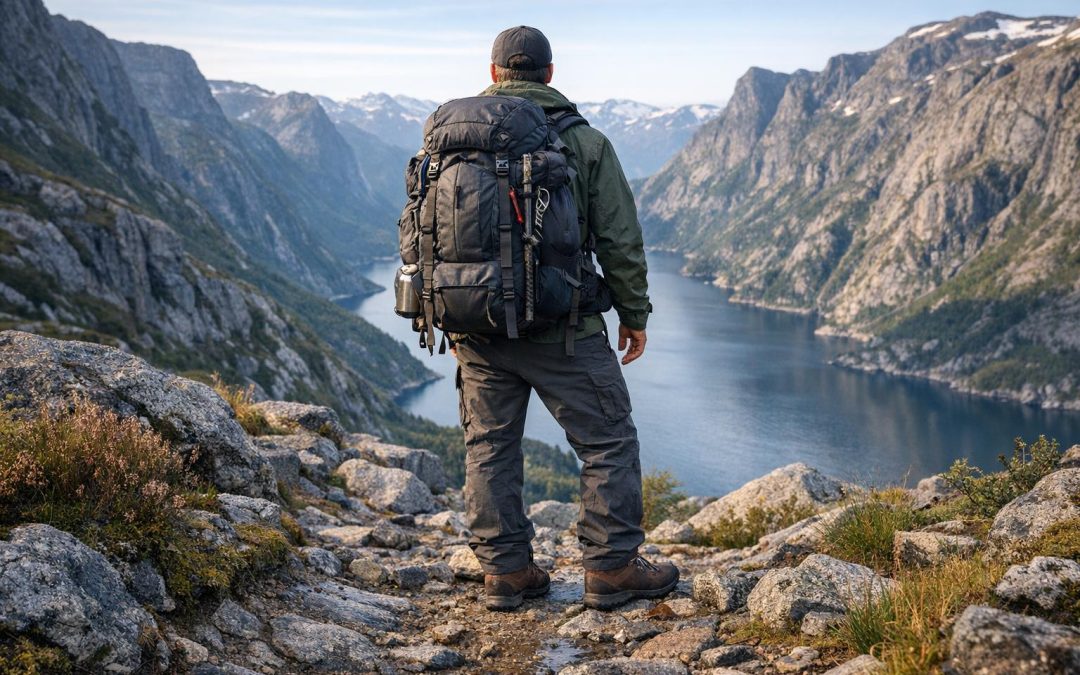
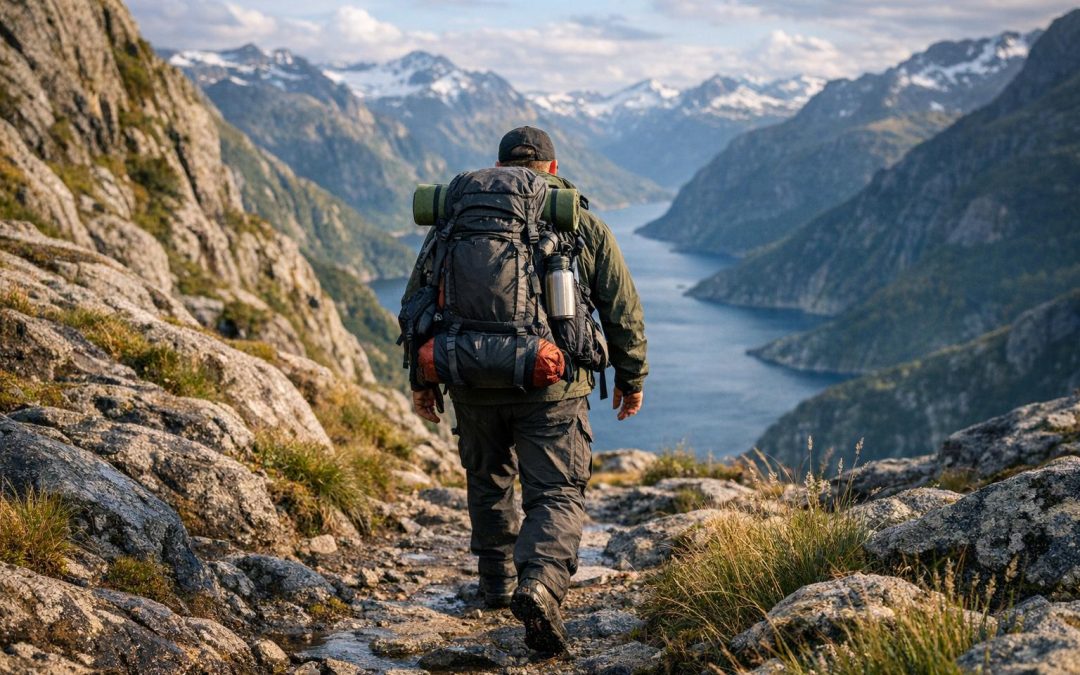
Ten days in Norway is the perfect amount of time to experience everything at your own pace. It's enough to enjoy challenging hikes, breathtaking fjords, and villages where time seems to stand still. It's also the time needed to understand why this region of the world so fascinates adventurers.

If you're looking for a trek in Norway that combines wild nature, Scandinavian culture, and exceptional landscapes, you've come to the right place. This article guides you through a 10-day itinerary that follows the country's most beautiful trails, with all the practical advice you need to set off with confidence.

Why Norway for a 10-day trek?

Norway isn't just a hiking destination: it's a place where every day feels like a new adventure. In 10 days, you can traverse several radically different regions, from spectacular fjords to mountain plateaus, from the Lofoten Islands to the heart of the country.

This trip combines several worlds in a single stay. You hike on marked trails, discover cities like Oslo and Bergen , sleep in mountain huts or guesthouses, and eat like a hungry explorer after a long day's trek. This is what makes trekking in Norway so different from a simple hike: it's a complete immersion in a landscape and a culture.

The best time for this adventure? June to August . Temperatures are mild (between 15 and 20°C depending on the region), the days are long with the midnight sun approaching, and all the mountain huts are open. The trails are also generally free of snow, making navigation easier even for those traveling alone.

The 10-day trekking itinerary: step by step

Days 1-2: Departure from Oslo, first steps in Scandinavia

You arrive in Oslo, a vibrant capital city that serves as the gateway to your journey. Take some time to explore the city center, stroll along the Oslo Fjord, and soak up the Scandinavian energy. A full day here allows you to adjust to the time zone and prepare your gear for the hike, which truly begins on day 3.

The drive from Oslo to the trekking regions is never tedious. The landscapes unfold with pine forests, small crystal-clear lakes, and mountains rising on the horizon. You can already feel that you are entering a different world.

Days 3-4: The Besseggen ridge, the unmissable trek

You are now in the Jotunheimen region, in the heart of Norway. The Besseggen ridge is one of the most famous treks in the country, and for good reason: it is a level 2 (moderate to strenuous) trail that crosses a rocky ridge between two lakes with impossible colours.

This 14 km hike can be done in a day. You set off early, climb gradually, and the effort is truly worthwhile. From the ridge, you'll have a commanding view of Lakes Bessvatnet and Gjende. The panorama from the summit is an image you'll cherish long after your return.

Physical level required: endurance, but not exceptional. If you've already walked 6-7 hours in a day, you can do Besseggen. Your feet should be used to it, and a good pair of hiking boots is essential.

Day 5: Heading to the fjords

You leave the mountains for the fjords. This transition is magical: the landscapes change completely. You descend towards the coast, towards scenery where cliffs plunge vertically into turquoise water.

This day is often dedicated to travel and acclimatizing to the new landscape. You explore a small coastal village, you walk leisurely, you rest before the next exertions.

Days 6-7: The Sognefjord and the Geirangerfjord

The fjords of Norway are not images: they are physical experiences. The Sognefjord is the largest fjord in the country, and the Geirangerfjord is the most spectacular with its waterfalls cascading down the cliffs.

You can combine hiking and fjord cruising. One day of hiking along the shores, the other day from the boat, allowing you to see the landscapes from a radically different perspective. Some trails run directly along the fjords: the walk is practically with your feet in the water, with steep mountains towering above your head.

This is where you understand why Norway attracts adventurers from all over the world. It's raw, it's wild, it's beautiful without artifice.

Day 8: Trolltunga or the Preikestolen rock

You have a choice between two classic landmarks. Trolltunga (the troll's tongue) is a rock that juts horizontally out from the mountain, more than 700 meters above the lake. Preikestolen (the priest's pulpit) is a flat cliff that overlooks the Lysefjord from a height of 604 meters.

These two treks are rated level 2-3 (strenuous to difficult). Trolltunga requires 10-12 hours of hiking. Preikestolen is shorter (4 hours round trip) but very popular. Choose according to your energy level and your tolerance for crowds (Preikestolen attracts large numbers of people in the summer).

The effort required to reach these rocks is intense. The last few meters are sometimes dizzying. But when you set foot on the rock and look down into the void beneath your feet, all effort vanishes. It's a moment of pure adventure.

Day 9: The Lofoten Islands or return to Bergen

If you still have some energy left, you can take a detour to the Lofoten Islands , a legendary archipelago in the north of the country. It's an addition that requires some adjustments to your itinerary, but it's well worth it. Mountains rise directly from the sea, fishing villages seem frozen in time, and hiking trails offer breathtaking views.

Otherwise, you head back down to Bergen , Norway's second-largest city. Bergen deserves at least half a day: it's a colorful port city with Hanseatic facades, interesting museums, and a pleasant café scene. It's also where you begin to transition from "full-on adventure" mode to a more urban experience.

Day 10: Last day and departure

Your last day is usually spent on a final easy trek or leisurely stroll before heading to the airport or catching a train. You also have time to do some shopping, enjoy one last meal as you've learned, and allow your body to recover before your return journey.

What level of physical fitness is required?

Honestly? You don't need to be an athlete. Hiking trails in Norway are generally well-marked and maintained. The average difficulty level of the treks offered is 2 (moderate) to 3 (strenuous).

What really matters is consistency. If you've walked 4-5 hours regularly before you leave, you'll feel comfortable. If you arrive unprepared, the first two days will be tough, but you'll adapt.

Feet suffer more than legs. A good pair of hiking boots, suitable socks, and patience make up 80% of comfort during a 10-day trek.

Practical information: costs, accommodation and preparation

Budget and rates

A 10-day trek in Norway varies greatly in price depending on your style. All-inclusive organized tours generally cost between €1,300 and €4,000 , depending on whether you travel alone, have a guide, and the level of comfort chosen.

If you're organizing your trip independently, budget for: flights (€200-€400), accommodation (€50-€120 per night), food (€30-€50 per day), and local transport (€200-€300 for 10 days). In total, a self-guided trip costs between €1,500 and €2,500 for two weeks, including comfortable food and accommodation.

Where to sleep during your trek

Norway offers several options. Mountain huts (DNT hytter) provide simple but clean dormitories, and often access to a kitchen. Rural guesthouses offer more comfort. Village hotels offer maximum convenience.

Many trekkers combine mountain huts for days of strenuous hiking with guesthouses or hotels in villages for rest and recovery. It's a good compromise between adventure and relaxation.

When to leave?

June, July, and August are the ideal months. Average temperatures range from 15 to 20°C. The days are very long (in June, the midnight sun begins). The trails are clear of snow. All the mountain huts are open.

September is possible but colder and wetter. October already marks the beginning of the Nordic autumn. Winter (November-April) makes treks much more difficult and requires specialized equipment (cross-country skis, for example).

How to prepare before departure?

Physical preparation: start 8-12 weeks in advance. Walk regularly, climb stairs, and hike locally if possible.

Equipment: Invest in good hiking boots, a comfortable backpack (50-65 liters), a sturdy waterproof jacket, and a suitable layering system. The weather in Norway changes quickly: you can experience sunshine and cold winds in the same day.

Documentation: Valid passport; check entry requirements (generally a passport is sufficient for European citizens). Download offline maps and a reliable trail guide.

Insurance: Travel insurance including mountain repatriation is strongly recommended.

The unforgettable landscapes you will see

During these 10 days, you will see scenery that will change your perception of beauty. The mountains of Jotunheimen rise like cathedrals. The fjords are so deep and so high that you feel small. The Lofoten Islands offer rocky, mineral landscapes that seem to come from another planet.

Each region of Norway has its own character. The south is more accessible, with greener valleys. The north becomes wilder and more rugged. The east (towards Sweden and the border) offers endless forests. The west is dominated by the fjords.

What makes trekking in Norway unique is that you traverse all these worlds in 10 days. You never stay long enough in one region to truly know it, but you see enough to understand why Norwegians are so attached to this land.

Walking independently or with a guide?

Both approaches work. A guided trek offers safety, local learning, and a friendly atmosphere. A self-guided trek offers freedom, flexibility, and a more direct connection with nature.

Most hiking trails are well-marked. If you're comfortable using a map, compass, and an offline GPS app, you can hike on your own. The trails are safe (little risk of encountering dangerous wildlife), and you'll regularly meet other hikers.

A guide transforms the experience: they know the stories, the birds, the plants, the best places to eat and sleep. It's more expensive, but it's also culturally enriching.

After the trek: the real adventure isn't over

A 10-day trek in Norway isn't a "trip over" when you return. It's a starting point. You discover you're capable of things you never thought possible. You understand your body differently. You've tasted the freedom of walking for days without urban obligations.

Many trekkers return. Some expand their activities: cross-country skiing in winter, mountain biking in autumn, longer stays. Norway offers plenty of reasons to come back year after year.

It's also excellent preparation for other long-distance adventures. If you complete a 10-day trek in Norway, you'll have the foundation to explore other great European trails: the GR20 in Corsica, the crossing of the Alps, or even following a legendary route like the European Continental Divide through several countries.

5-day trek in Norway: the most beautiful routes for an unforgettable adventure

5-day trek in Norway: the most beautiful routes for an unforgettable adventure

Five days. That's about how long it takes to understand why Norway fascinates travelers from all over the world. No need for three weeks or an exhausting trek: in five days of hiking, you'll experience the very essence of what this country has to offer. From breathtaking fjords to wild plateaus, from glaciers to crystal-clear lakes. It's short, just long enough to truly immerse yourself, and accessible to far more people than you might think.

Why choose Norway for a 5-day trek?

There's something magical about Norway during the summer. The midnight sun disrupts the normal rhythm: you hike at 10 p.m. under a bright sky, you walk whenever you feel like it, night barely exists. This feeling of timeless adventure changes everything.

But that's not all. Norway boasts incredibly diverse landscapes within manageable distances. In five days, you can traverse a national park, hike along a UNESCO World Heritage fjord, and trek across a glacier. Every day brings something new. This is what makes this destination so irresistible for an intensive yet not exhausting hike.

And let's be honest: Norway has that rare ability to transform a simple hike into a memorable experience. The mountain huts, the dramatic landscapes, the overall atmosphere make each day a true story rather than just a stop along the way.

The greatest 5-day treks in Norway

The Norway Trail: Hardangervidda and Trolltunga

This is probably the most iconic trek in the country. The Norway Trail takes you across Hardangervidda, Norway's largest mountain plateau, before arriving at Trolltunga. This rock formation, which rises 700 meters above Lake Ringedalsvatnet, is a sight that stays with you.

The trek requires a reasonable level of fitness. The stages are between 15 and 20 kilometers long, with varying but never overwhelming elevation gains. What makes this trip exceptional is the gradual isolation: you start in populated areas, then little by little, nature takes over. During the last two nights, you'll hardly see a soul.

Best time to go: June to September. Summer offers the best conditions, although the trails can be wet in June. September brings warmer colors and fewer crowds.

The Rondane Triangle: the oldest national park

Rondane is Norway's oldest national park, and it shows. The trails are renowned, the visitor infrastructure runs like clockwork, and the alpine scenery remains breathtaking.

This 5-day hike takes you between mountain huts: Rondvassbu, Dørålseter, and Bjørnhollia. The distances are moderate (12 to 18 km per day), making this trek suitable for hikers at level 2 or 3. The ascents are gradual, and the descents are well-marked.

The major advantage: you're guided from refuge to refuge, which lightens your pack and eliminates the pressure of improvising accommodation. You hike with just the essentials on your back. That's almost a luxury in the world of trekking.

Trollheimen: Three days in the adventure triangle

For those seeking something more physical, Trollheimen delivers. The Triangle Route traverses radically different landscapes: verdant valleys, steep mountain passes, hidden lakes. Every day brings a surprise.

Warning: This trek requires a good level of fitness. Stages regularly exceed 20 kilometers, and daily elevation gains range from 500 to 1000 meters. It's ambitious, but not impossible for someone who hikes regularly. The scenery is worth every drop of sweat.

The fjords: kayaking, hiking and world heritage

What if your trek wasn't just hiking? Some 5-day tours in Norway combine walking with other activities. Take the fjord trek, for example: you hike, but you also go sea kayaking on the Nærøyfjord, a UNESCO World Heritage Site. You paddle down a river on a stand-up paddleboard, and you cycle through the Voss forests on a mountain bike.

This type of experience appeals to those who enjoy variety. No monotonous activities, but a truly multifaceted adventure. Obviously, it requires better logistical planning, but the experience is all the richer for it.

What level of skill do you really need to have?

Honestly? It depends on the trek you choose. But let's look at it another way: Norway isn't anything exceptional in terms of technical difficulty. There's no climbing, no specialized equipment required on most trails. The real challenge is endurance.

A 5-day trek means walking for 5 consecutive days. If you're used to walking 10 or 15 kilometers in an afternoon without any major problems, you're ready for level 2 (accessible). If you hike regularly and are comfortable with elevation changes, level 3 (intermediate) won't be a problem for you.

Physical fitness is the real variable. Not technique. The mountain huts and Norwegian infrastructure take care of the rest.

When to leave? The real questions of the season

June: Snow lingers in the highlands. Mountain huts are barely open. Trails can be arduous. Best avoided unless you are very experienced.

July and August The best window of opportunity. All the trails are accessible, the mountain huts are running at full capacity, and the weather conditions are more stable. It's peak season, so there are more people, but also a greater guarantee of success.

September: a very good alternative. The trails remain perfectly accessible, the crowds drastically decrease, and the autumn colors begin to appear. The nights become more real (the sun finally sets), which changes the atmosphere of the trek.

October and beyond: the mountain huts gradually close, the weather becomes unpredictable, the days get shorter. It's no longer the same adventure.

Equipment: what you really need to pack

The golden rule in Norway: the weather can change in two hours. You need a small, well-thought-out bag, not a bulky contraption on your back.

  • Base layer and fleece: forget cotton, opt for merino wool or quick-drying synthetics
  • Waterproof jacket: non-negotiable. Northern rains are short but direct.
  • Hiking pants and shorts: alternate depending on the day
  • Good hiking shoes: reinforced at the ankles for rocky trails
  • 30-40 liter bag: enough for a night without excess
  • Filter or water bottle with purification tablets: lake water is generally safe, but it's always best to be safe than sorry.
  • Paper map and compass: yes, even with GPS. Batteries drain quickly, and mountain huts always provide paper versions.
  • External battery: your phone is your anchor to safety
  • Warm base layer for the night: even in summer, mountain huts can be cool

The rest you'll find along the way or at the mountain huts. The local guides think of everything: extra blankets, portable heaters, even instant coffee.

Realistic budget for 5 days

Let's be clear: Norway isn't cheap. But compared to an all-inclusive trip to an exotic destination, it's not ruinous either.

For a 5-day trek with accommodation in mountain huts and shared meals, expect to pay between 400 and 800 euros per person. Variables include the comfort level of the huts (a basic cabin versus a lodge with a sauna), the food (do you cook or is it cooked for you?), and the number of additional activities.

Flights from France: €150 to €300 depending on the season. Local transport (bus, train): €50 to €100. Equipment, if you need to buy any: this is the major initial investment, but it can be reused.

Tip: If this is your first big adventure, opt for treks with a local guide or fully organized tours. It costs a bit more, but you can be sure everything will run as planned.

Prepare your body before departure

Six weeks before the trek, start walking. Regularly. You don't need to be a marathon runner, but getting your joints and muscles used to progressive exertion makes all the difference.

Ideally, two or three outings per week, between one and two hours, on varied terrain. Include both ascents and descents. After two weeks, you'll already feel your legs reacting differently. After six weeks, you'll be surprised by how well you've adapted.

On the day of departure, you shouldn't be in a state of physical panic. You should instead be impatient.

What people actually experience on these treks

We read a lot of accounts of treks in Norway. Some are exaggerated, others very sincere. Here's what really comes up:

The first three days are tough. Your feet protest, your back stiffens, you wonder if you really packed enough water or food. That's normal. It passes after that.

On day 3 or 4, something shifts. You stop counting the kilometers; you walk simply because it's beautiful. You fall asleep before 9 p.m., you wake up with the sun without an alarm. The rhythm of the trek becomes your rhythm.

On the last night, you almost struggle to finish. Not that you're tired, but you wish it could have been longer. You leave Norway with the feeling of having only seen the beginning of a larger story.

Start now: plan your trek

If you're aiming for next summer, the best time to book is January or February. The best dates get booked up quickly, especially for popular mountain huts.

Local guides in Norway are generally reliable. Check reviews (especially on trekking websites), confirm the guide's experience for the type of trek you choose, and don't hesitate to ask direct questions about the actual level of difficulty required.

One last thing: make your booking with some flexibility. Norway loves last-minute weather changes, and good guides know how to adapt the itinerary without spoiling the adventure.