
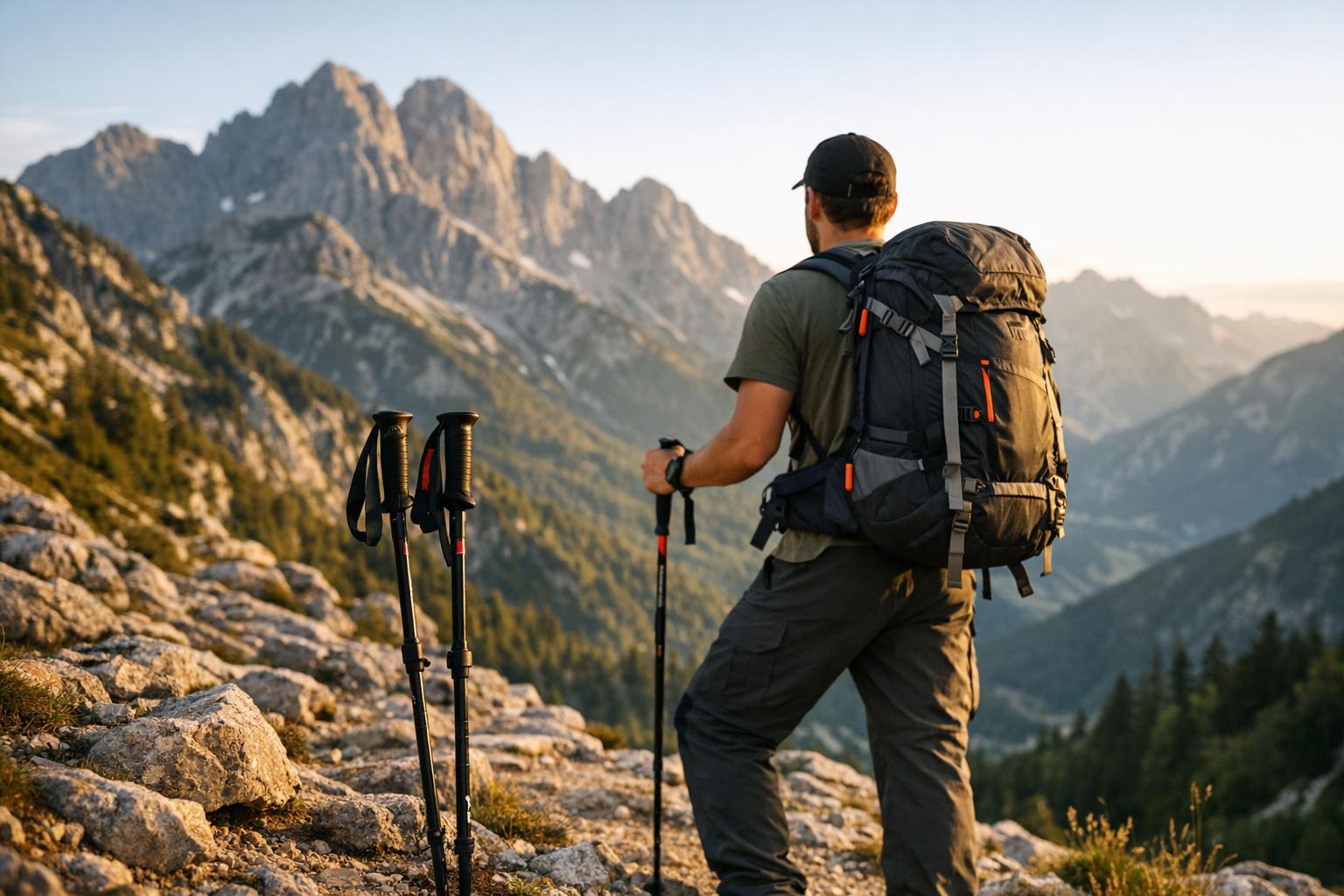
You've been scrolling through social media for an hour, paralyzed by the choices. Iceland or the Alps? A three-day trek or a two-week expedition? Alone or in a group? The truth is, Europe offers so many possibilities that sometimes you end up not choosing anything at all. But here's the thing: trekking in Europe isn't just about a list of "most beautiful trails." It's a much more personal question: what truly draws you to the mountains?
Why Europe has become the ultimate destination for hikers
Something has changed in the last ten years. Europe is no longer seen as "plan B" when the Himalayas or Patagonia are not an option. It has become a trekking destination in its own right, with its own logic, charms and challenges.
It's simple: Europe boasts a remarkable density of diverse landscapes within a reasonable distance . You go hiking in the Northern Alps of France, cross Italy in ten days, and finish in Switzerland. Three countries, three distinct worlds, one single mountain range. Where else can you find that?
There's also the practical aspect. Trekking trails in Europe are marked, maintained, and designed to accommodate hikers. Mountain huts are available. Villages are rarely more than a day's walk away. If you have to turn back for medical reasons, you're never truly isolated. It's trekking with an invisible safety net, and that's a considerable advantage for beginners or families.
And then there's the culture. Every mountain in Europe tells a story. The Alps aren't just a geological chain; they're an arc that cuts through the Alpine sensibilities of France, Switzerland, Italy, and Austria. Each slope has its own distinct character. That's what makes a trip to Europe so enriching.
The classics: where to begin
If this is your first real mountain expedition, some routes come up again and again for one simple reason: they work.
The Tour du Mont Blanc This is the perfect example. This 165km trek crosses France, Italy, and Switzerland in approximately 10 to 12 days. The required physical level is moderate if you are used to regular hiking. The infrastructure is near perfect: mountain huts every day, exemplary trail markings, and scenery that justifies every effort. It's a classic for a reason: because it actually works.
Next comes the choice of style. Do you prefer something wilder, less crowded? Consider the Dolomites in Italy, with their orange rock towers that look like they've been plucked straight from a fantasy film. Or perhaps the Tatra Mountains trek between Slovakia and Poland, a more secluded but equally spectacular option. The duration varies between 5 and 8 days depending on your pace.
For a less strenuous but equally rewarding hike, the West Highland Way in Scotland offers 96 km of pure British scenery, doable in 5 to 7 days. The difficulty level is truly moderate. It's ideal if you want to prove to yourself that you're capable of a long hike without pushing yourself to the limit on monstrous elevation gains.
Understanding your own level: the real question
Here's what no one really dares to say: most people overestimate their physical abilities in the mountains. They compare themselves to friends who "do sports," and bam, they think they're capable. Except that climbing 1,000 meters of elevation gain six days in a row is something else entirely than three gym sessions a week.
The level of difficulty in trekking depends on three variables: your actual cardiorespiratory fitness (not your couch potato physique), your acclimatization to the mountains, and the duration you can sustain. A moderate mountain trek involves 5 to 6 hours of walking per day with limited elevation gain (500 to 800 meters). That's already much more than it sounds.
Here's a genuine test: can you hike for four hours on flat terrain without experiencing intense pain? If so, you can start. If not, train first. It sounds silly, but it's the difference between an unforgettable trek and three days of suffering before giving up.
Duration and period: two inseparable parameters
When choosing your trek in Europe, two questions come up: how many days do you really have? And when can you leave?
The duration isn't simply a matter of the number of days available. Having two weeks isn't necessarily better than ten. Two weeks allows for a longer route, yes, but also a less stressful pace. You expend less mental energy managing fatigue. A week of maximum effort is harder to handle psychologically. Ten days is often the sweet spot.
As for the timing, it makes all the difference. September in Europe is generally perfect: the summer tourist season is over, the mountain huts are still open, and the weather is (more or less) stable. July and August offer more comfort but also more crowds and higher prices. May and June are also excellent if you accept that high-altitude huts may still be closed on some routes.
Avoid hiking in the mountains in October unless you really know what you're doing. The rain sets in, the mountain huts start closing, and daylight fades early. It's not impossible, but it's more demanding.
Whether you're traveling solo, as a couple, or in a group: what really changes with the company
Going on a trek alone is a philosophical experience. Going in a group is a social experience. They are not at all the same adventure.
Going solo, you move at your own pace. You have no compromises. The trail becomes your personal conversation with the mountain. It's intense. It's also, for some, a little lonely around day 6.
Traveling in a group with a professional guide offers increased safety, local expertise, and shared experiences. Mountain huts are pre-booked, and risks are minimized. For a trek in Europe, especially if it's your first expedition, joining a guided group isn't a luxury; it's often the most sensible option.
Whether you're a couple or a small group of friends, it's the best of both worlds if you're well-matched in terms of skill level and pace. Otherwise, beware: nothing destroys a friendship like spending twelve hours straight with someone incompatible in the mountains.
The route: classic or off the beaten track
There are two schools of thought. Those who follow an established and well-documented route (Tour du Mont Blanc, Grande Traversée des Lofoten in Norway, etc.), and those who build something more personal.
The classic routes exist for a reason: they work. The mountain huts are ready. Other hikers can offer advice. If you have to turn back, it's possible without disaster. For a first serious hike, it's honestly the smartest route.
But if you have one or two successful treks under your belt, creating your own itinerary becomes both possible and exciting. Imagine: linking three valleys in the Massif Central, or connecting the peaks of the Alps in an original way, or exploring a lesser-known mountain range in Spain or Greece. It requires more preparation, a better knowledge of the mountains, and a group capable of improvising. But a trip you create yourself always stays in your memory longer.
The real questions before starting
Before clicking "book," ask yourself these questions honestly:
- Can I really sustain a daily physical effort for 5 to 10 days in a row?
- What period of time truly suits me without compromising on work or private life?
- Do I already have experience in the mountains, or is this all new to me?
- What is my actual budget? (Refuges aren't free, nor are flights.)
- Am I able to adapt if the weather turns bad?
- Why am I really doing this? (The answer "because it's beautiful" is valid. "Because everyone else is doing it" is less so.)
Answer honestly, and your choice of trekking destination in Europe will become obvious.
Prepare your body and mind
Two months before your departure, start training seriously. Not just "doing a little exercise." I'm talking about weekly hikes with elevation gain, weighted stair climbs, and long walks. Your body needs to know what to expect. That's the difference between a successful trek and six days of suffering.
Mentally, prepare yourself for boredom. The mountains aren't always spectacular. There are gray days, stages where the trail is monotonous, moments when fatigue sets in. That's normal. It's often where the real transformation begins. The most beautiful treks in Europe are only beautiful because they were earned through sweat, not because they were seen on Instagram.
Invest in good shoes. A good tent. A good backpack. It's not a luxury: it's the difference between sleeping and not sleeping, walking and suffering. On a ten-day trek, comfort is not an understatement.
Europe: a continent of possible treks
What makes trekking in Europe so rewarding is the variety. You can hike in the Northern Alps in France or Switzerland. You can trek across Italy through the Dolomites. You can explore the Lofoten mountain range in Norway. You can trek down to Greece, Spain, or Portugal. Each region offers its own level of difficulty, its own atmosphere, and its own schedule.
Europe is not a monolithic destination for trekking. It's a continent. And that's precisely what makes it so interesting: you can come back ten times and discover ten completely different mountains .
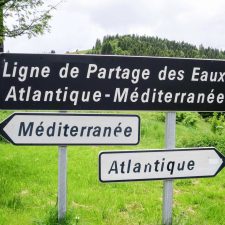
Europe on the wireThe European Continental Divide trail explores precisely this richness: following the European watershed for over 10,000 km allows you to understand Europe through its mountains and rivers. It's another way of seeing the continent, of course. But it reveals something you'll never see on a typical trek: how everything in Europe is interconnected.
Recent comments