

Ten days in Norway is the perfect amount of time to experience everything at your own pace. It's enough to enjoy challenging hikes, breathtaking fjords, and villages where time seems to stand still. It's also the time needed to understand why this region of the world so fascinates adventurers.
If you're looking for a trek in Norway that combines wild nature, Scandinavian culture, and exceptional landscapes, you've come to the right place. This article guides you through a 10-day itinerary that follows the country's most beautiful trails, with all the practical advice you need to set off with confidence.
Why Norway for a 10-day trek?
Norway isn't just a hiking destination: it's a place where every day feels like a new adventure. In 10 days, you can traverse several radically different regions, from spectacular fjords to mountain plateaus, from the Lofoten Islands to the heart of the country.
This trip combines several worlds in a single stay. You hike on marked trails, discover cities like Oslo and Bergen , sleep in mountain huts or guesthouses, and eat like a hungry explorer after a long day's trek. This is what makes trekking in Norway so different from a simple hike: it's a complete immersion in a landscape and a culture.
The best time for this adventure? June to August . Temperatures are mild (between 15 and 20°C depending on the region), the days are long with the midnight sun approaching, and all the mountain huts are open. The trails are also generally free of snow, making navigation easier even for those traveling alone.
The 10-day trekking itinerary: step by step
Days 1-2: Departure from Oslo, first steps in Scandinavia
You arrive in Oslo, a vibrant capital city that serves as the gateway to your journey. Take some time to explore the city center, stroll along the Oslo Fjord, and soak up the Scandinavian energy. A full day here allows you to adjust to the time zone and prepare your gear for the hike, which truly begins on day 3.
The drive from Oslo to the trekking regions is never tedious. The landscapes unfold with pine forests, small crystal-clear lakes, and mountains rising on the horizon. You can already feel that you are entering a different world.
Days 3-4: The Besseggen ridge, the unmissable trek
You are now in the Jotunheimen region, in the heart of Norway. The Besseggen ridge is one of the most famous treks in the country, and for good reason: it is a level 2 (moderate to strenuous) trail that crosses a rocky ridge between two lakes with impossible colours.
This 14 km hike can be done in a day. You set off early, climb gradually, and the effort is truly worthwhile. From the ridge, you'll have a commanding view of Lakes Bessvatnet and Gjende. The panorama from the summit is an image you'll cherish long after your return.
Physical level required: endurance, but not exceptional. If you've already walked 6-7 hours in a day, you can do Besseggen. Your feet should be used to it, and a good pair of hiking boots is essential.
Day 5: Heading to the fjords
You leave the mountains for the fjords. This transition is magical: the landscapes change completely. You descend towards the coast, towards scenery where cliffs plunge vertically into turquoise water.
This day is often dedicated to travel and acclimatizing to the new landscape. You explore a small coastal village, you walk leisurely, you rest before the next exertions.
Days 6-7: The Sognefjord and the Geirangerfjord
The fjords of Norway are not images: they are physical experiences. The Sognefjord is the largest fjord in the country, and the Geirangerfjord is the most spectacular with its waterfalls cascading down the cliffs.
You can combine hiking and fjord cruising. One day of hiking along the shores, the other day from the boat, allowing you to see the landscapes from a radically different perspective. Some trails run directly along the fjords: the walk is practically with your feet in the water, with steep mountains towering above your head.
This is where you understand why Norway attracts adventurers from all over the world. It's raw, it's wild, it's beautiful without artifice.
Day 8: Trolltunga or the Preikestolen rock
You have a choice between two classic landmarks. Trolltunga (the troll's tongue) is a rock that juts horizontally out from the mountain, more than 700 meters above the lake. Preikestolen (the priest's pulpit) is a flat cliff that overlooks the Lysefjord from a height of 604 meters.
These two treks are rated level 2-3 (strenuous to difficult). Trolltunga requires 10-12 hours of hiking. Preikestolen is shorter (4 hours round trip) but very popular. Choose according to your energy level and your tolerance for crowds (Preikestolen attracts large numbers of people in the summer).
The effort required to reach these rocks is intense. The last few meters are sometimes dizzying. But when you set foot on the rock and look down into the void beneath your feet, all effort vanishes. It's a moment of pure adventure.
Day 9: The Lofoten Islands or return to Bergen
If you still have some energy left, you can take a detour to the Lofoten Islands , a legendary archipelago in the north of the country. It's an addition that requires some adjustments to your itinerary, but it's well worth it. Mountains rise directly from the sea, fishing villages seem frozen in time, and hiking trails offer breathtaking views.
Otherwise, you head back down to Bergen , Norway's second-largest city. Bergen deserves at least half a day: it's a colorful port city with Hanseatic facades, interesting museums, and a pleasant café scene. It's also where you begin to transition from "full-on adventure" mode to a more urban experience.
Day 10: Last day and departure
Your last day is usually spent on a final easy trek or leisurely stroll before heading to the airport or catching a train. You also have time to do some shopping, enjoy one last meal as you've learned, and allow your body to recover before your return journey.
What level of physical fitness is required?
Honestly? You don't need to be an athlete. Hiking trails in Norway are generally well-marked and maintained. The average difficulty level of the treks offered is 2 (moderate) to 3 (strenuous).
What really matters is consistency. If you've walked 4-5 hours regularly before you leave, you'll feel comfortable. If you arrive unprepared, the first two days will be tough, but you'll adapt.
Feet suffer more than legs. A good pair of hiking boots, suitable socks, and patience make up 80% of comfort during a 10-day trek.
Practical information: costs, accommodation and preparation
Budget and rates
A 10-day trek in Norway varies greatly in price depending on your style. All-inclusive organized tours generally cost between €1,300 and €4,000 , depending on whether you travel alone, have a guide, and the level of comfort chosen.
If you're organizing your trip independently, budget for: flights (€200-€400), accommodation (€50-€120 per night), food (€30-€50 per day), and local transport (€200-€300 for 10 days). In total, a self-guided trip costs between €1,500 and €2,500 for two weeks, including comfortable food and accommodation.
Where to sleep during your trek
Norway offers several options. Mountain huts (DNT hytter) provide simple but clean dormitories, and often access to a kitchen. Rural guesthouses offer more comfort. Village hotels offer maximum convenience.
Many trekkers combine mountain huts for days of strenuous hiking with guesthouses or hotels in villages for rest and recovery. It's a good compromise between adventure and relaxation.
When to leave?
June, July, and August are the ideal months. Average temperatures range from 15 to 20°C. The days are very long (in June, the midnight sun begins). The trails are clear of snow. All the mountain huts are open.
September is possible but colder and wetter. October already marks the beginning of the Nordic autumn. Winter (November-April) makes treks much more difficult and requires specialized equipment (cross-country skis, for example).
How to prepare before departure?
Physical preparation: start 8-12 weeks in advance. Walk regularly, climb stairs, and hike locally if possible.
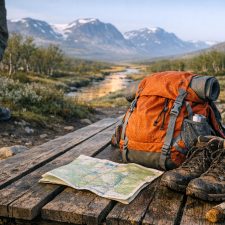
Equipment: Invest in good hiking boots, a comfortable backpack (50-65 liters), a sturdy waterproof jacket, and a suitable layering system. The weather in Norway changes quickly: you can experience sunshine and cold winds in the same day.
Documentation: Valid passport; check entry requirements (generally a passport is sufficient for European citizens). Download offline maps and a reliable trail guide.
Insurance: Travel insurance including mountain repatriation is strongly recommended.
The unforgettable landscapes you will see
During these 10 days, you will see scenery that will change your perception of beauty. The mountains of Jotunheimen rise like cathedrals. The fjords are so deep and so high that you feel small. The Lofoten Islands offer rocky, mineral landscapes that seem to come from another planet.
Each region of Norway has its own character. The south is more accessible, with greener valleys. The north becomes wilder and more rugged. The east (towards Sweden and the border) offers endless forests. The west is dominated by the fjords.
What makes trekking in Norway unique is that you traverse all these worlds in 10 days. You never stay long enough in one region to truly know it, but you see enough to understand why Norwegians are so attached to this land.
Walking independently or with a guide?
Both approaches work. A guided trek offers safety, local learning, and a friendly atmosphere. A self-guided trek offers freedom, flexibility, and a more direct connection with nature.
Most hiking trails are well-marked. If you're comfortable using a map, compass, and an offline GPS app, you can hike on your own. The trails are safe (little risk of encountering dangerous wildlife), and you'll regularly meet other hikers.
A guide transforms the experience: they know the stories, the birds, the plants, the best places to eat and sleep. It's more expensive, but it's also culturally enriching.
After the trek: the real adventure isn't over
A 10-day trek in Norway isn't a "trip over" when you return. It's a starting point. You discover you're capable of things you never thought possible. You understand your body differently. You've tasted the freedom of walking for days without urban obligations.
Many trekkers return. Some expand their activities: cross-country skiing in winter, mountain biking in autumn, longer stays. Norway offers plenty of reasons to come back year after year.
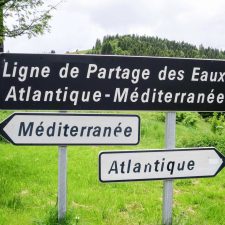
It's also excellent preparation for other long-distance adventures. If you complete a 10-day trek in Norway, you'll have the foundation to explore other great European trails: the GR20 in Corsica, the crossing of the Alps, or even following a legendary route like the European Continental Divide through several countries.
Recent comments