

Five days. That's about how long it takes to understand why Norway fascinates travelers from all over the world. No need for three weeks or an exhausting trek: in five days of hiking, you'll experience the very essence of what this country has to offer. From breathtaking fjords to wild plateaus, from glaciers to crystal-clear lakes. It's short, just long enough to truly immerse yourself, and accessible to far more people than you might think.
Why choose Norway for a 5-day trek?
There's something magical about Norway during the summer. The midnight sun disrupts the normal rhythm: you hike at 10 p.m. under a bright sky, you walk whenever you feel like it, night barely exists. This feeling of timeless adventure changes everything.
But that's not all. Norway boasts incredibly diverse landscapes within manageable distances. In five days, you can traverse a national park, hike along a UNESCO World Heritage fjord, and trek across a glacier. Every day brings something new. This is what makes this destination so irresistible for an intensive yet not exhausting hike.
And let's be honest: Norway has that rare ability to transform a simple hike into a memorable experience. The mountain huts, the dramatic landscapes, the overall atmosphere make each day a true story rather than just a stop along the way.
The greatest 5-day treks in Norway
The Norway Trail: Hardangervidda and Trolltunga
This is probably the most iconic trek in the country. The Norway Trail takes you across Hardangervidda, Norway's largest mountain plateau, before arriving at Trolltunga. This rock formation, which rises 700 meters above Lake Ringedalsvatnet, is a sight that stays with you.
The trek requires a reasonable level of fitness. The stages are between 15 and 20 kilometers long, with varying but never overwhelming elevation gains. What makes this trip exceptional is the gradual isolation: you start in populated areas, then little by little, nature takes over. During the last two nights, you'll hardly see a soul.
Best time to go: June to September. Summer offers the best conditions, although the trails can be wet in June. September brings warmer colors and fewer crowds.
The Rondane Triangle: the oldest national park
Rondane is Norway's oldest national park, and it shows. The trails are renowned, the visitor infrastructure runs like clockwork, and the alpine scenery remains breathtaking.
This 5-day hike takes you between mountain huts: Rondvassbu, Dørålseter, and Bjørnhollia. The distances are moderate (12 to 18 km per day), making this trek suitable for hikers at level 2 or 3. The ascents are gradual, and the descents are well-marked.
The major advantage: you're guided from refuge to refuge, which lightens your pack and eliminates the pressure of improvising accommodation. You hike with just the essentials on your back. That's almost a luxury in the world of trekking.
Trollheimen: Three days in the adventure triangle
For those seeking something more physical, Trollheimen delivers. The Triangle Route traverses radically different landscapes: verdant valleys, steep mountain passes, hidden lakes. Every day brings a surprise.
Warning: This trek requires a good level of fitness. Stages regularly exceed 20 kilometers, and daily elevation gains range from 500 to 1000 meters. It's ambitious, but not impossible for someone who hikes regularly. The scenery is worth every drop of sweat.
The fjords: kayaking, hiking and world heritage
What if your trek wasn't just hiking? Some 5-day tours in Norway combine walking with other activities. Take the fjord trek, for example: you hike, but you also go sea kayaking on the Nærøyfjord, a UNESCO World Heritage Site. You paddle down a river on a stand-up paddleboard, and you cycle through the Voss forests on a mountain bike.
This type of experience appeals to those who enjoy variety. No monotonous activities, but a truly multifaceted adventure. Obviously, it requires better logistical planning, but the experience is all the richer for it.
What level of skill do you really need to have?
Honestly? It depends on the trek you choose. But let's look at it another way: Norway isn't anything exceptional in terms of technical difficulty. There's no climbing, no specialized equipment required on most trails. The real challenge is endurance.
A 5-day trek means walking for 5 consecutive days. If you're used to walking 10 or 15 kilometers in an afternoon without any major problems, you're ready for level 2 (accessible). If you hike regularly and are comfortable with elevation changes, level 3 (intermediate) won't be a problem for you.
Physical fitness is the real variable. Not technique. The mountain huts and Norwegian infrastructure take care of the rest.
When to leave? The real questions of the season
June: Snow lingers in the highlands. Mountain huts are barely open. Trails can be arduous. Best avoided unless you are very experienced.
July and August The best window of opportunity. All the trails are accessible, the mountain huts are running at full capacity, and the weather conditions are more stable. It's peak season, so there are more people, but also a greater guarantee of success.
September: a very good alternative. The trails remain perfectly accessible, the crowds drastically decrease, and the autumn colors begin to appear. The nights become more real (the sun finally sets), which changes the atmosphere of the trek.
October and beyond: the mountain huts gradually close, the weather becomes unpredictable, the days get shorter. It's no longer the same adventure.
Equipment: what you really need to pack
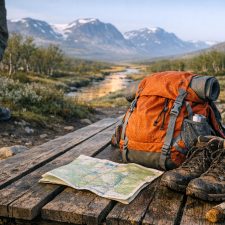
The golden rule in Norway: the weather can change in two hours. You need a small, well-thought-out bag, not a bulky contraption on your back.
- Base layer and fleece: forget cotton, opt for merino wool or quick-drying synthetics
- Waterproof jacket: non-negotiable. Northern rains are short but direct.
- Hiking pants and shorts: alternate depending on the day
- Good hiking shoes: reinforced at the ankles for rocky trails
- 30-40 liter bag: enough for a night without excess
- Filter or water bottle with purification tablets: lake water is generally safe, but it's always best to be safe than sorry.
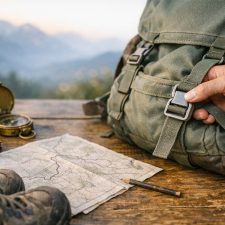
- Paper map and compass: yes, even with GPS. Batteries drain quickly, and mountain huts always provide paper versions.
- External battery: your phone is your anchor to safety
- Warm base layer for the night: even in summer, mountain huts can be cool
The rest you'll find along the way or at the mountain huts. The local guides think of everything: extra blankets, portable heaters, even instant coffee.
Realistic budget for 5 days
Let's be clear: Norway isn't cheap. But compared to an all-inclusive trip to an exotic destination, it's not ruinous either.
For a 5-day trek with accommodation in mountain huts and shared meals, expect to pay between 400 and 800 euros per person. Variables include the comfort level of the huts (a basic cabin versus a lodge with a sauna), the food (do you cook or is it cooked for you?), and the number of additional activities.
Flights from France: €150 to €300 depending on the season. Local transport (bus, train): €50 to €100. Equipment, if you need to buy any: this is the major initial investment, but it can be reused.
Tip: If this is your first big adventure, opt for treks with a local guide or fully organized tours. It costs a bit more, but you can be sure everything will run as planned.
Prepare your body before departure
Six weeks before the trek, start walking. Regularly. You don't need to be a marathon runner, but getting your joints and muscles used to progressive exertion makes all the difference.
Ideally, two or three outings per week, between one and two hours, on varied terrain. Include both ascents and descents. After two weeks, you'll already feel your legs reacting differently. After six weeks, you'll be surprised by how well you've adapted.
On the day of departure, you shouldn't be in a state of physical panic. You should instead be impatient.
What people actually experience on these treks
We read a lot of accounts of treks in Norway. Some are exaggerated, others very sincere. Here's what really comes up:
The first three days are tough. Your feet protest, your back stiffens, you wonder if you really packed enough water or food. That's normal. It passes after that.
On day 3 or 4, something shifts. You stop counting the kilometers; you walk simply because it's beautiful. You fall asleep before 9 p.m., you wake up with the sun without an alarm. The rhythm of the trek becomes your rhythm.
On the last night, you almost struggle to finish. Not that you're tired, but you wish it could have been longer. You leave Norway with the feeling of having only seen the beginning of a larger story.
Start now: plan your trek
If you're aiming for next summer, the best time to book is January or February. The best dates get booked up quickly, especially for popular mountain huts.
Local guides in Norway are generally reliable. Check reviews (especially on trekking websites), confirm the guide's experience for the type of trek you choose, and don't hesitate to ask direct questions about the actual level of difficulty required.
One last thing: make your booking with some flexibility. Norway loves last-minute weather changes, and good guides know how to adapt the itinerary without spoiling the adventure.
Recent comments