

Mont Blanc. Four thousand eight hundred and eight meters of rock, ice, and dreams. For many, it's the ultimate summit in the Alps. But for skiers, it's something else entirely: it's the promise of a descent that erases everything you've ever known.
Ski touring on Mont Blanc is not just a simple ski hike. It's a technical, demanding adventure where every decision counts. So before you set off, you need to understand what you're really getting into.
Why ski touring Mont Blanc changes everything
Skiing from the summit of Mont Blanc is an experience few get to enjoy. Not a groomed slope, not a ski school. A high-mountain route where you must read the terrain, anticipate hazards, and master your skiing on ever-changing slopes.
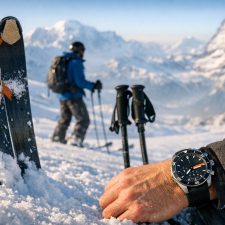
It's also very different from a traditional ascent on foot. With your skis and climbing skins, you save time and reduce muscle fatigue. But you also add a layer of complexity: managing your equipment, mastering the uphill technique, and above all, developing the skill to descend steep and exposed slopes.
Those who return from Mont Blanc on skis rarely talk about figures or meters of vertical gain. They talk about light, silence, the moment when the Alps unfold beneath you and you realize that you are truly at the highest point in Western Europe.
The classic route: from Plan de l'Aiguille to the summit
The most common starting point for a ski touring ascent of Mont Blanc is from the Plan de l'Aiguille , accessible by cable car from Chamonix. This is the strategic choice: you save on elevation gain at the start, you gain altitude quickly, and you arrive where the real adventure begins.
From there, the first day's route follows a simple but unforgiving logic. You first cross the Bossons Glacier, an area where crevasses demand vigilance. You then ascend to the Grands Mulets refuge, located at approximately 3,815 meters. This is your stop for the night, your base for the final push.
This refuge is the soul of this route. Perched on its rock amidst the ice, it is where you prepare your skis, check your equipment, sleep poorly (normal at this altitude) and get up at three or four in the morning for the ascent of the big day.
On the second day, you leave the refuge still in the dark. The route climbs steeply to the Grand Plateau, a vast white expanse that seems endless. It's magnificent and unsettling at the same time. No landmarks, no rock face to reassure you. Just you, your skis, and the whiteness.
From the Grand Plateau, you climb the Bosses ridge, the final slope before the summit. It's steep, narrow, and often windy. This is where technique really matters. And then, suddenly, you're there. At the summit of Mont Blanc.
The descent: the real question
Many believe that the descent is the reward. That's true. But it's also the moment when mistakes become dangerous.
You have two main options. The first is the direct north face: it's fast, it looks simple, but the wind slabs there are treacherous and can turn you into an unwilling passenger. The second is the corridors, a spectacular route with significant crevasses. Are you familiar with both? No? Then that's where a guide makes all the difference.
Most groups return via the same route: Grand Plateau, Bosses ridge in the opposite direction, then descent to the Grands Mulets refuge. Day three often consists of descending back to Chamonix, which may seem easy after two intense days, but where fatigue accumulates and accidents happen.
What level do you really need?
Let's be honest: this isn't an easy hike. Ski touring on Mont Blanc requires several things that not all skiers possess.
First, endurance. The elevation gain is significant: approximately 1,300 to 1,500 meters uphill each day for two days. It's a long way. Not dangerously long, but long. You have to enjoy cycling uphill.
Second, skiing technique. You don't need to be an off-piste specialist. But you must be comfortable skiing on slopes of 25 to 30 degrees, and be able to manage your skis in varying conditions (hard snow, crusty snow, powder). Descending Mont Blanc requires control, not virtuosity, but control.
Third, mountain experience. Crevasses are serious. You need to know how to rope up, what a crevasse is, and how not to panic if the ground collapses beneath you (it doesn't happen often if you're careful, but it does happen). This kind of experience isn't acquired overnight.
The actual level requiredThis means: red skiing, regular mountain hiking, and basic rope handling skills. If you meet these three criteria and are in good physical condition, you have a good chance. Otherwise, a guide becomes not only helpful but essential.
Choosing your guide: a real decision
Chamonix guides are not a luxury option. They are professionals, trained by the Compagnie des Guides de Chamonix, with serious certifications and years of experience in the high mountains.
A good guide reads the snow conditions, assesses avalanche risks, knows every crevasse on the Bossons Glacier (or nearly so), and above all, knows when to say no. Yes, there will be days when you show up at the Grands Mulets refuge and he announces that the conditions don't allow for the ascent. That's what a good guide is.
The cost varies, but expect to pay between 800 and 1,500 euros for a two-day guided trip. That's not insignificant. It also ensures that an experienced person will be monitoring your safety and that of the group.
The best season: when to go
Ski touring on Mont Blanc is mainly practiced from December to May. But “practicable” does not mean “optimal”.
March and April are generally considered the best times. The snow is more stable, the days are longer, and conditions are often more predictable. In January and February, you'll face long nights, intense cold, and sometimes unstable snow. In May, the avalanche risk increases, and the snow becomes slushy by the end of the day.
December can be magnificent or nightmarish depending on the year. It all depends on the snowpack. You really need a guide who knows the current conditions.
Equipment: what is non-negotiable
For this activity, your skis are not your piste skis. You need specialized skis: lighter, thinner, equipped with bindings compatible with a free heel offset for the ascent.
Climbing skins are mandatory. They attach to the bottom of your skis and provide exceptional grip on the ascent. Without them, you won't reach the summit of Mont Blanc on skis.
Next comes the safety equipment: harness, helmet, crampons, ice axe, rope. Yes, all three. Even when skiing, because there are sections where you take off your skis and have to proceed on foot over ice or rock. A pair of crampons can save your life on the Bosses ridge when conditions are harsh.
Clothing is classic but critical: merino or synthetic layers, a waterproof jacket, warm gloves (because at 4,800 meters, your hands will suffer), a hat, and sunglasses or goggles. The glare from the snow can blind you without protection.
Physical preparation: giving yourself the best chances
You don't need to be an athlete. But you do need cardio. Three to four months before your departure, start preparing your body: stair climbing, running, hiking with gradual elevation gain.
Acclimatizing to altitude is also important. If you're coming from sea level, going straight to 4,800 meters is a shock. Chamonix is at 1,000 meters. The Grands Mulets refuge is at 3,815 meters. Your body has about 18 to 24 hours to adapt between each altitude. It's not much, but it's better than nothing.
Many also do a reconnaissance day: they climb to the Plan de l'Aiguille, descend towards the Grands Mulets refuge, and then return. It's an excellent way to test your equipment and physical condition without the pressure of the summit.
The Europesurlefil experience: another vision of the mountains
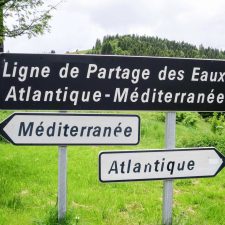
If you like the idea of following a geographical trail through the mountains, Europesurlefil , the European Continental Divide trail, offers a similar philosophy. It's a long-distance adventure that follows the watershed line through fifteen countries, by hiking, mountain biking, or skiing. Mont Blanc is a logical landmark, a true high point, but not the only one.
This broader approach to the mountain, where each activity creates a physical connection with the terrain, is exactly what skiers experience on Mont Blanc: a reading of the landscape, an intimacy with the geography, an understanding of the forces that shape the continent.
And after the summit?
Once you've descended, you realize you've experienced something. Not just reached a peak. You've spent two days and two nights above 3,800 meters, you've skied on glaciers, you've been close to crevasses, and you've seen the summit of Mont Blanc beneath your skis.
Many return with the same question: what now? There are other great peaks that offer ski touring: Monte Rosa, the Breithorn, the Dent Blanche. Each with its own personality, its own dangers, its own joys.
But Mont Blanc remains Mont Blanc. It's the one that calls to you first.
Recent comments