
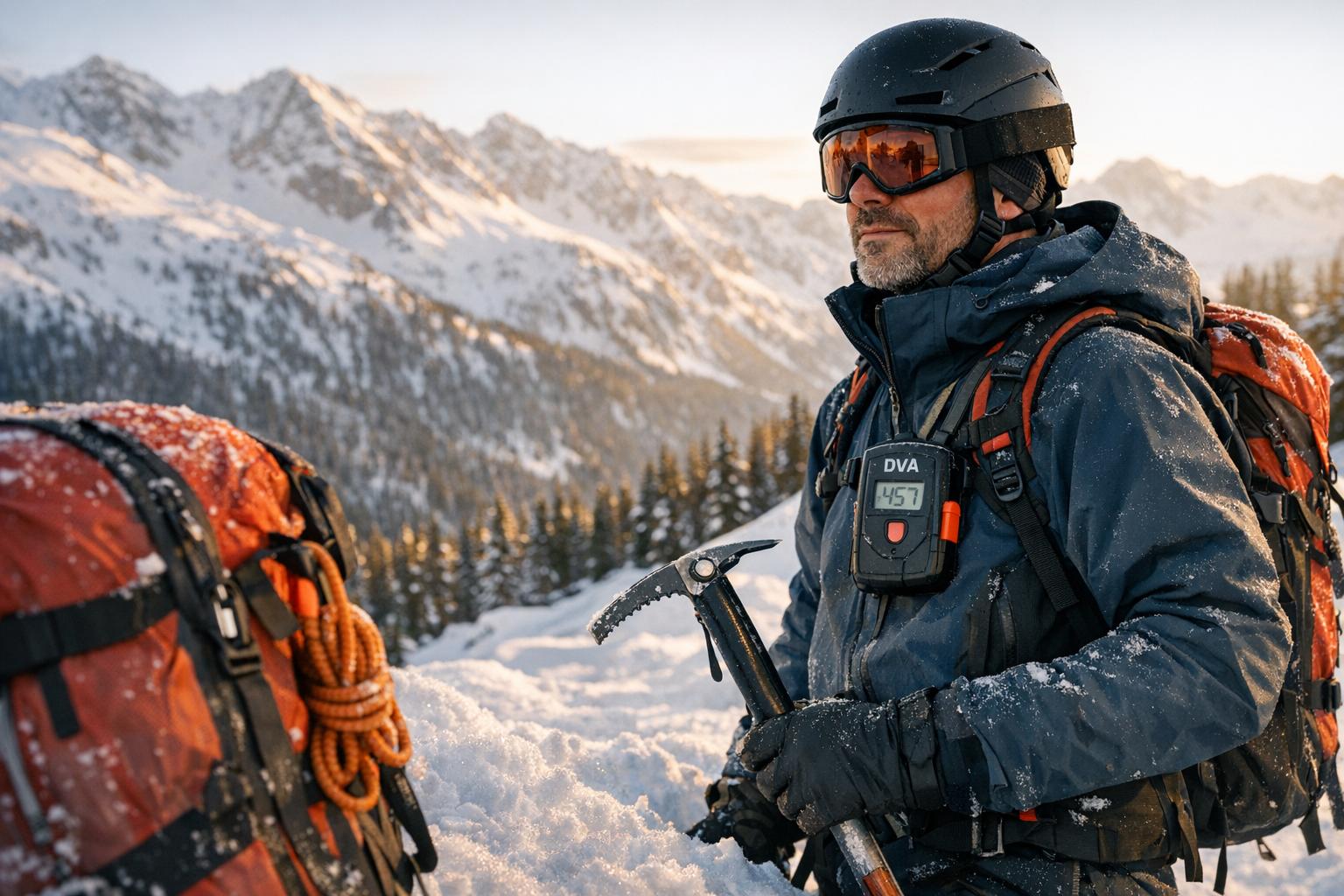
A ski tour is much more than a simple expedition: it's a total immersion in wild landscapes, a personal challenge where every step counts. Following the European Continental Divide , these long cross-border traverses unfold the full richness of a multi-activity adventure. But this intensity demands unwavering vigilance: safety on a ski tour is essential to fully enjoying these exceptional moments.
Whether you're planning a technical raid or a more accessible expedition, there's no room for chance. So, how can you best prepare? What equipment should you choose? What precautions should you take to experience this adventure with complete peace of mind?
What safety equipment is absolutely essential to take on a ski tour?
Embarking on the Europesurlefil routes requires a carefully packed bag. Equipment plays a crucial role, but it's not enough to simply amass gear: you must understand each tool and trust it.
At the heart of safety, you'll find the essential trio: the shovel, the probe, and the avalanche transceiver (DVA). The shovel is your first ally for clearing snow in an emergency, the probe precisely detects the location of a buried person, and the DVA—your living companion—saves precious time during search and rescue operations.
To complete this kit, remember to bring technical clothing suitable for temperature variations, warm gloves, a complete first-aid kit, and a headlamp, especially on long days when dusk can be unexpected. And don't forget sunscreen, essential against the intense glare of the snow.
How to plan your route to minimize risks on a ski tour?
Preparing your route, especially along the European Continental Divide, is a true act of commitment. Each stage deserves careful study: the terrain, the presence of mountain huts, the current weather conditions, but also the specific cross-border factors that can influence weather conditions or local regulations.
Use up-to-date maps and specialized apps, and check snow and avalanche bulletins regularly—these are your best insurance policies. Plan breaks, assess your fatigue, and always prioritize common sense: a vigilant and united group is a force to be reckoned with when faced with the unexpected.
To enrich your experience, you can discover on Europesurlefil detailed itineraries that combine skiing, snowshoeing and hiking, offering a complete approach adapted to different profiles of adventurers.
What precautions should be taken against the risk of avalanches during a ski tour?
Avalanches are one of the major dangers in the high mountains. Following the Europesurlefil trail, where the terrain varies, it is crucial to learn to read the signs of nature: recently blown snow, fresh cracks, suspicious noises under your feet… Every detail counts.
Maintaining good skiing technique is essential: never gather all skiers in the same place, avoid steep slopes, and keep a close eye on your surroundings. A rope can be a useful tool in certain sections, but nothing replaces solid knowledge and constant vigilance.
How to use an avalanche transceiver (DVA) correctly?
An avalanche transceiver (DVA) is much more than just a piece of equipment: it's a vital partner. It must be worn in transmit mode throughout the entire outing. In the event of an accident, the rapid switching to receive mode by other members allows for the efficient location of the victim. Learning to use it properly requires proper training: dedicated courses are offered regularly, and at Europesurlefil, we recommend incorporating them into your preparation.
How to react in case of an accident or burial during a ski tour?
In the event of an accident, calm is paramount. The speed of the rescue operation depends on the initial reactions: immediate deployment of the shovel, precise probing, and searching with an avalanche transceiver. Every second saves lives. At the same time, calling in professional rescue services should be considered without delay if conditions warrant it.
A well-stocked first aid kit in your bag is essential for providing initial care. Your best protection remains the combination of good equipment, solid training, and shared experience with a vigilant group.
Is it always necessary to go on a ski tour with a guide?
When following the European Continental Divide, choosing a professional guide often guarantees a safe and enriching adventure. The guide is familiar with the specific challenges of crossing borders, sensitive areas, and the best options for dealing with unforeseen weather conditions.
However, for experienced and well-trained practitioners, autonomy is possible. The key is to never underestimate the risks and to prioritize ongoing training.
What training courses should I take to improve my safety during a ski tour?
The blog Europesurlefil highly recommends specific training courses: avalanche courses, use of avalanche transceivers, mountain first aid, accurate interpretation of weather reports, and group management in alpine environments. These skills transform a hike into a controlled adventure.
Testing your equipment in real conditions, training regularly, and planning for unforeseen events (spare parts, hydration) are all actions that enhance your safety.
In summary: what should you remember for optimal safety during a ski tour?
- Essential safety equipment (avalanche transceiver, shovel, probe, rescue kit) must be mastered and carried at all times.
- Plan your route carefully, taking into account the specific features of the European Continental Divide route and local conditions.
- Learn to detect the warning signs of avalanches and adapt your progress accordingly.
- Train regularly, and prioritize collective experience and shared knowledge.
- Never underestimate the benefits of a professional guide for a confident cross-border adventure.
On Europesurlefil, each route tells a story, an encounter between man and mountain, between borders and cultures. Safety is not a constraint, but the key to fully opening this door to wonder and personal fulfillment.

Recent comments