
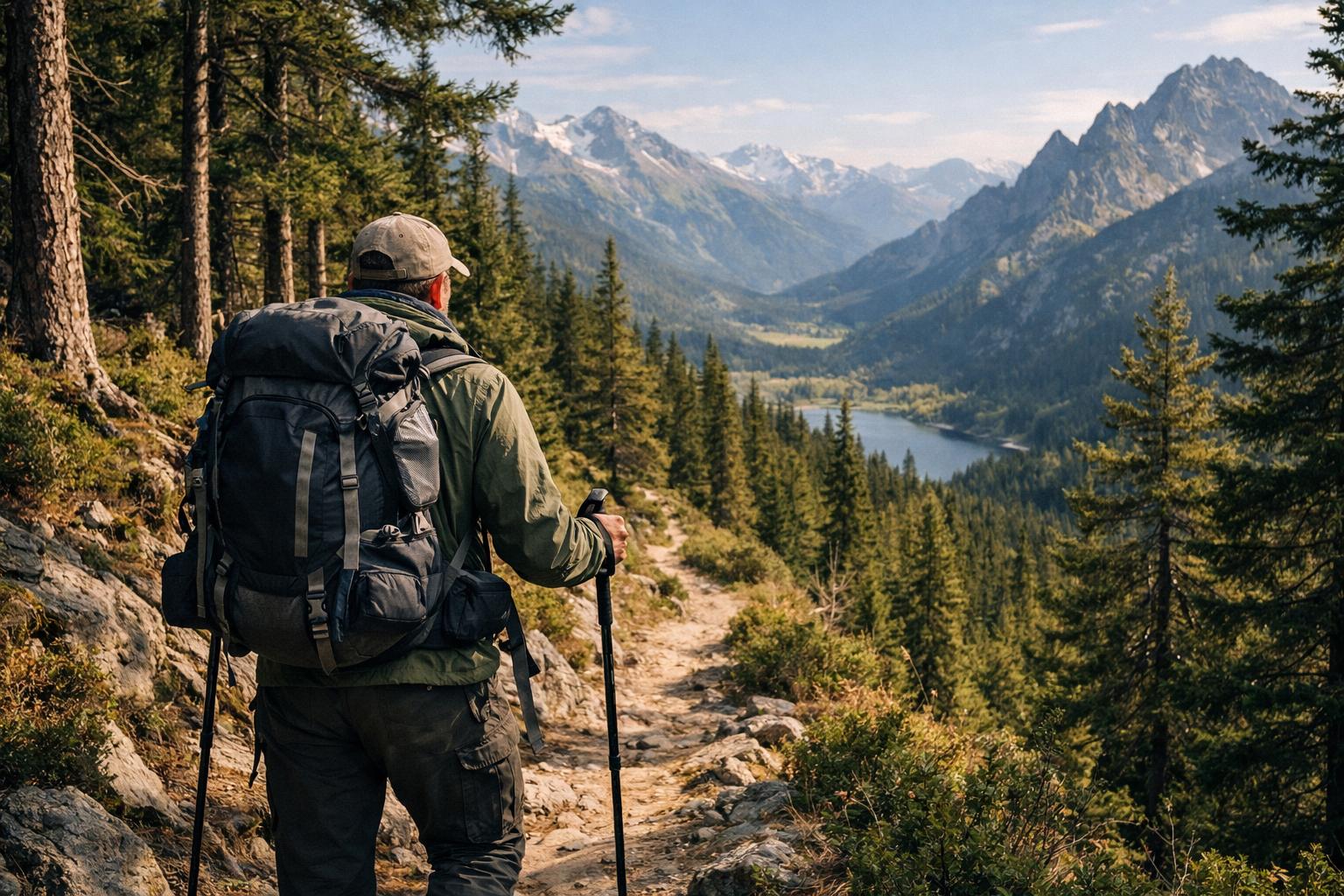
What does it truly mean to embark on a great European crossing? More than just a route, it means following the natural line that divides the continent's waters, the famous European Continental Divide . This journey is part of the tradition of long-distance hiking, but with a unique richness linked to the countries crossed and the landscapes shaped by this watershed.
What defines a great European crossing?
A major European trek is more than just a hike. It's a long journey through diverse regions, a physical challenge, and an immersion in the continent's natural environments and cultures. It often involves thousands of kilometers, mainly on marked long-distance hiking trails (GR), crossing several countries to grasp the geography, history, and local ways of life.
The key criterion: natural continuity, such as that offered by the European Continental Divide , this hydrological axis which separates the major watersheds of Europe, giving this adventure a unique coherence.
Why choose this watershed line rather than another path?
This line is not just a simple line on a map; it is the true hydrological backbone of the continent. Following this route, one crosses remarkable and varied natural areas, far from the usual and sometimes overcrowded paths.
This route offers an experience where mountains, valleys, lakes, and forests illustrate the history of water in Europe. The journey primarily involves about ten countries, each contributing its own cultural and natural wealth.
Which countries are actually crossed by the European Continental Divide?
The official route of the European Continental Divide passes through key countries that accurately represent European geographical diversity:
- Norway And Suede, in their Scandinavian landscapes, between fjords, forests and plateaus.
- Germany, particularly in mountain ranges, with a transition to lower areas.
- Poland, rich in forests and lakes, with gentle terrain.
- Czech Republic, with its plateaus and wooded massifs.
- Slovakiafamous for its high mountains and green valleys.
- Austria, in the heart of the Alps, with impressive peaks and glaciers.
- Swiss, with its iconic alpine landscapes, glaciers and deep alpine valleys.
- Francemainly in the Alps, with superb high-altitude passages.
- Italy, in the northern alpine areas, without going as far as Sicily.
The line does not cross countries such as Denmark, Luxembourg, Belgium, or the Netherlands, contrary to some previous claims. Its crossing into European Russia remains open to interpretation and is not clearly defined in the standard route.
How to prepare for your big European journey?
Preparing for such an adventure requires rigor and foresight:
- Season's pick : Adapted to local climates, spring and autumn often appear ideal, a balance between favorable weather and colorful landscapes.
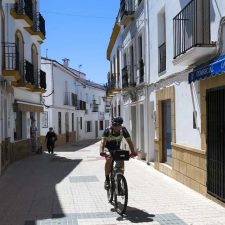
- Equipment Technical clothing, suitable footwear and equipment depending on the activity (hiking, skiing, mountain biking) are essential.
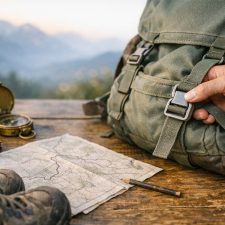
- Route study Some sections, such as the Great Alpine Crossing (GTA), are well marked, while others require more experience and a sense of direction.
- Planning This journey will take several months, and can be broken down into stages that can be achieved at your own pace.
- Logistics organization Accommodation, supplies, transport, everything must be planned in advance to avoid unforeseen events.
This adventure also requires good physical condition and a certain ability to adapt to wild environments.
The best time to go
Summer is a good time for high-altitude hiking in the Alps, with accessible trails and open mountain huts. For ski touring, winter is of course the preferred season.
The plains and less mountainous areas benefit in spring and autumn with mild temperatures and colourful landscapes, although the weather can be more variable.
Landscapes and natural diversity along the line
The European Continental Divide offers a crossing rich in ecosystems:
- Plateaus and dense forests in Scandinavia, with lakes and rivers that sculpt the landscape.
- Steep alpine ranges, permanent glaciers, and flowering alpine pastures.
- Massifs and valleys of the Carpathians and Pyrenees, alternating between rocks and meadows.
- River valleys where nature reclaims its rights and where local history is palpable.
- Mediterranean landscapes of northern Italy, where mountains and sea meet without exceeding the alpine zones.
Each stage reveals a different facet of European natural and cultural heritage.
The advantages of hiking in Europe for a crossing
Europe boasts a dense network of marked trails and a long tradition of long-distance hiking, allowing for a blend of cultural discovery and immersion in nature. The proximity of the countries traversed simplifies logistics and offers exceptional diversity in a single trip.
Furthermore, the infrastructure, safety and comfort make this adventure accessible to a wide audience, while retaining a spirit of exploration.
Europesurlefil: a dedicated guide for this crossing
Europe on the wire It shares a demanding and passionate approach to this crossing. The blog offers advice, stories, and detailed information to support each hiker in preparing for and completing this route.
Following Europesurlefil means giving yourself the means to fully experience this journey, with expert guidance that is mindful of the wild spaces traversed.
Recent comments