
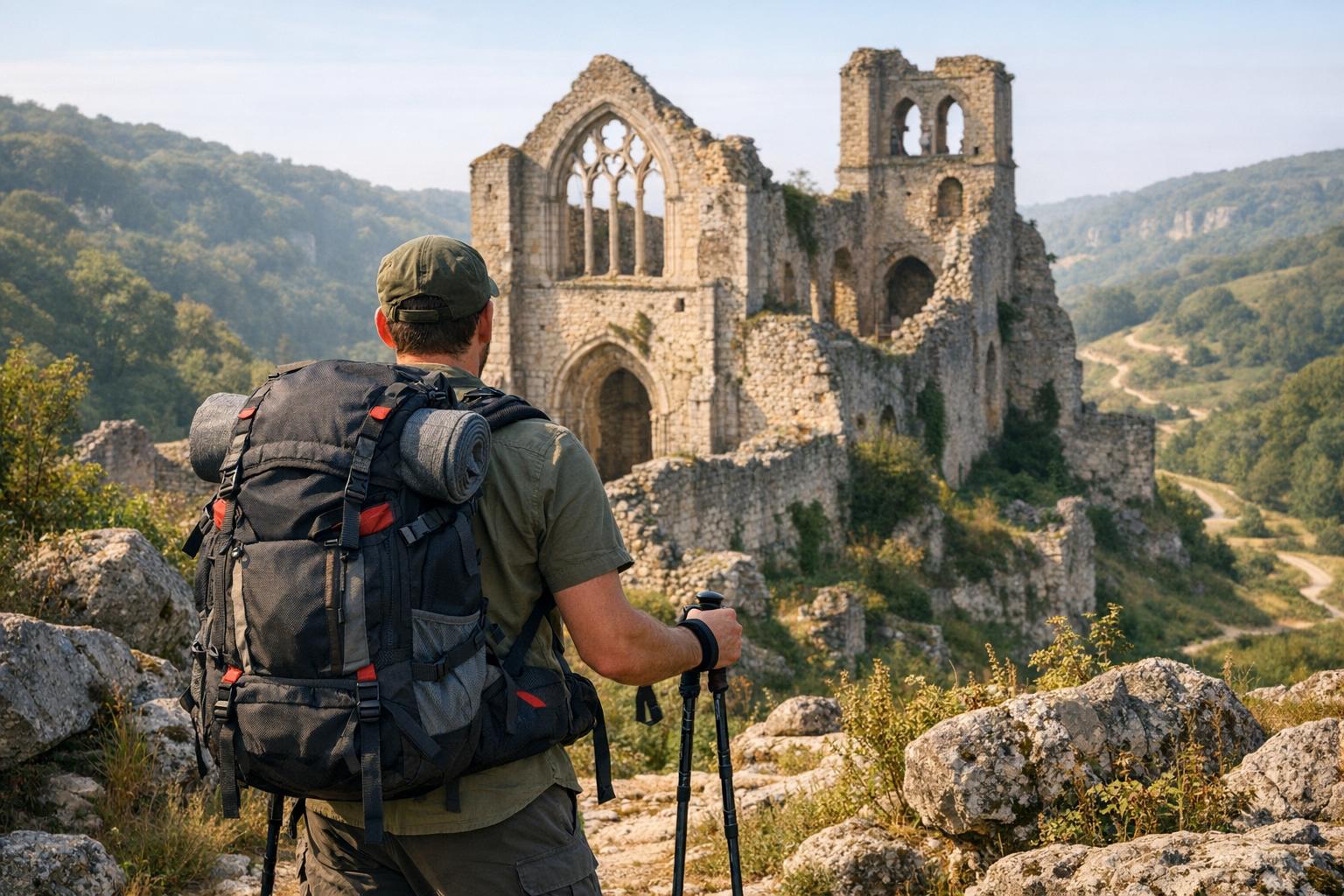
Walking is not simply about moving from point A to point B; it's about encountering a living history, immersing oneself in landscapes and cultures that tell the stories of the past and present. Heritage trekking offers this rare experience: traversing trails where each step reveals a cultural or natural treasure , a legend, or a tradition. Rather than chasing after frozen monuments, it is along the paths, in the heart of territories shaped by time, that an authentic adventure unfolds.
What are the ideal routes for combining hiking and cultural discovery?
The dream of the hiker passionate about heritage is a route where nature and history intertwine, where every turn reveals a site, a craft, a monument, or an iconic landscape. In Europe, numerous heritage trails are designed to showcase vernacular architecture and historical treasures. For example, the nature and heritage discovery trail in Les Contamines-Montjoie offers an 8.6 km loop that delves into the village's past while exploring its natural riches.
Similarly, routes like the Douvaine heritage trail These trails are accessible to everyone, even families with strollers, offering a gentle and immersive way to discover local heritage. They provide numerous opportunities to slow down and see things differently. Choosing a tour that combines hiking and cultural discovery means opting for a trip that nourishes both body and mind.
How to organize a trekking trip focused on discovering heritage?
Planning a trek that blends natural exploration with cultural immersion requires preparation that goes beyond a simple equipment list. It's essential to factor in time spent visiting historical sites, understand the best seasons to fully appreciate the landscapes, and consider the seasonal cultural dimension (festivals, traditional markets, local exhibitions).
It is also helpful to learn about the specialist guides who accompany these routes, as they can offer unique insights into the history, traditions, and specific characteristics of the places you pass through. Often, it is they who transform a simple hike into a true immersion in the soul of a region.
Finally, for a successful trip, having the right equipment is essential. Comfort and practicality are paramount, especially for those who wish to explore sites sometimes off the beaten track. Sturdy shoes, a well-chosen backpack, and a guidebook detailing the cultural highlights are invaluable allies.
Which European regions best showcase this type of heritage trekking?
Europe abounds with lands where walking rhymes with memory. Along the famous watershed, recounted by Europesurlefil , the trace of the European Continental Divide, one traverses exceptional landscapes where history and nature intertwine. From the Alpine massifs sheltering vestiges of Antiquity to the rolling hills dotted with villages boasting vernacular architecture, the possibilities are immense.
Among the must-see treasures, the trails in the Vanoise and Ardèche regions offer the chance to discover Neolithic settlements, typical dry-stone structures, and fascinating prehistoric sites. Exploring these places within the framework of the European Continental Divide means understanding how humankind has shaped its environment over the centuries. Routes like the 4.4 km Les Condamines prehistoric discovery trail in Trigance invite you on a journey through 50,000 years of human and landscape history.
How does trekking to discover heritage enrich our travel experience?
This type of trekking goes far beyond a simple sporting activity. It offers an immersive experience that gives a unique depth to each stage. As you walk, you perceive other dimensions: the taste of local traditions, the richness of a living heritage, and the emotion linked to discovering breathtaking landscapes.
The traveler then becomes a sensitive explorer, capable of appreciating the raw beauty of a natural site while grasping the historical or cultural value that permeates it. It is a dialogue between nature and humankind, a sharing that gives meaning to this physical effort. Europesurlefil, the route of the European Continental Divide, perfectly embodies this demanding, cross-border vision, offering a long-distance adventure aligned with the hydrological and cultural backbone of the continent.
What are the best seasons and difficulty levels for these heritage hikes?
The choice of season greatly influences the quality of the experience. For heritage trekking, the ideal time is often when the trails are passable and the weather is pleasant, generally spring, summer, and early autumn. In the mountains, late snowfalls and intense summer heat should be avoided, while in more temperate regions, each season offers its own unique cultural and natural atmosphere.
Regarding difficulty, the heritage trails offer a variety of routes, ranging from easy family walks to more challenging treks. This diversity allows everyone to find a suitable route, whether it's a simple cultural jog or a long multi-day hike.
Where to start your next trek to discover the heritage?
If you're looking for an adventure that combines cultural discoveries and exceptional landscapes, Europesurlefil invites you to follow the European Continental Divide. This long route, crossing 15 countries, is an invitation to explore the hydrological and historical roots of Europe on foot, offering a unique experience for lovers of trekking and heritage.
Whether you're looking for a solo trip or a group getaway, marked trails or more secluded paths, the terrain for adventure is vast. By following this unique route, each step brings you closer not only to breathtaking scenery, but also to a rich and authentic cultural heritage.





Recent comments