

Between the wild landscapes of the Ariège Pyrenees and the wooded mysteries of the Black Mountains in the Cévennes, choosing a mountain biking destination can be a challenge. How do you compare these two mountain ranges where the passion for off-road cycling blends with a love of wide-open spaces? Which routes should you choose based on your preferences, skill level, and what you're looking to discover? Europesurlefil , the route of the European Continental Divide, offers an insightful overview to help you plan your next cycling getaway, at the heart of a project that connects the cultures, landscapes, and waterways of Europe.
Where can I go mountain biking in the Ariège Pyrenees and what are the key routes?
The Ariège Pyrenees mountain range is a renowned mountain biking paradise, with over 135 kilometers of trails certified by the French Cycling Federation (FFC). Sites such as Montaillou, Prades, Le Chioula, Ax-les-Thermes, the Beille resort, and Larnat offer diverse access to these routes, between high-altitude panoramas and dense forests.
The Couserans, a central area in Ariège, boasts 24 trails totaling 475 kilometers, suitable for all levels: from casual riders looking for a few easy kilometers to seasoned mountain bikers seeking challenging climbs and enduro terrain. The Grande Traversée VTT de l'Ariège (Great Mountain Bike Crossing of Ariège), a 116.73 km route with over 3,400 meters of elevation gain, promises an immersive experience through diverse landscapes and charming villages, blending stunning natural beauty with rich heritage.
In Ariège, you'll often ride on technical trails with winding singletrack, summer pasture sections, and panoramic paths. The variety of routes offers a huge choice between thrilling rides and leisurely, contemplative outings.
What are the mountain biking options in the Black Mountains of the Cévennes?
The Black Mountains, in the northwestern part of the Cévennes massif, attract visitors seeking wild spaces combined with a strong cultural identity. Mountain biking here offers an invitation to other forms of discovery: dense forests, hidden valleys, preserved hamlets, and breathtaking views of the Massif Central.
The mountain biking trails in this region vary from narrow paths and forest tracks to farm roads. Several local circuits are accessible from small villages, allowing riders to fully appreciate the blend of nature and history. Trails range from intermediate to difficult, perfect for those who want to combine technical challenges with scenic views amidst diverse vegetation.
How can these mountain biking areas be easily accessed and what services are available?
To reach the Ariège Pyrenees, several national and departmental roads converge on the main entry points: Ax-les-Thermes benefits from a rail link, thus facilitating access without a car. The Beille resort is also well-served and offers services adapted to mountain bikers.
In the Black Mountains, access is mainly by road, with starting points located in villages such as Saint-Pons-de-Thomières or Douch. Infrastructure is more modest than in the Pyrenees, but mountain bike rentals and accommodations suitable for ecotourism can still be found.
In Ariège, several rental companies offer quality equipment, including electric mountain bikes (e-MTBs), ideal for improving your skills or climbing hills more easily. In the Cévennes, rentals are more fragmented, often linked to local businesses or guesthouses that cater to cyclists' needs.
Comparison of routes: difficulty levels, points of interest and landscapes
| Criteria | Ariège Pyrenees | Black Mountains of the Cévennes |
|---|---|---|
| Difficulty of the routes | From easy to very difficult, with a strong presence of technical routes and significant elevation changes. | Moderate to difficult, focusing more on technical aspects and navigation in dense forest environments. |
| Average length | Routes between 15 and 50 km, Great Mountain Bike Crossing up to 116 km | The routes are generally between 10 and 30 km, suitable for half-day or full-day outings. |
| Points of interest | Picturesque villages, summer pastures, Pyrenean panoramas, thermal spas | Ancient forests, remote hamlets, unique flora and fauna, views of the Massif Central |
| Accessibility | Good, with plenty of public transport and bike rentals | More rural, better with a car, more limited rentals |
| Services (rental, guides) | Multiple options for mountain bike rentals, guides, and events such as the Ariégeoise VTT. | More artisanal, fewer in number but often personalized and of very high quality |
Is it possible to do a mountain bike crossing between the Ariège Pyrenees and the Black Mountains of the Cévennes?
The mountain bike crossing between these two mountain ranges is an ambitious experience, perfectly in line with the European spirit of sharing waterways and landscapes traversed by Europesurlefil. This adventure requires thorough preparation, as it covers a great distance with varied, sometimes demanding, sections in terms of elevation gain and terrain.
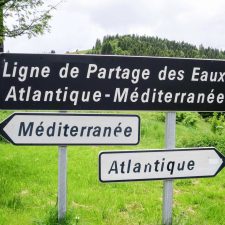
There is no official, ready-made route for a direct crossing, but by combining the trails and roads between Ariège and the Cévennes, it is possible to create a long mountain bike tour. This allows you to alternate between the Pyrenean summer pastures and the mysterious forests of the Montagnes Noires, offering a rich and comprehensive exploration of the Massif Central and the Pyrenees, while following the iconic line of the European Continental Divide, thus intersecting natural history and cross-border culture.
Practical advice: equipment, weather and safety for riding in these mountain ranges
Mountain biking in the Ariège Pyrenees and the Black Mountains requires equipment adapted to the terrain and varying conditions:
- Mountain bike or e-mountain bike : for the climb, an e-MTB helps on significant elevation changes, especially in Ariège.
- Helmet, gloves and protective gear : indispensable, especially on singletrack and technical trails.
- Appropriate clothing Pack light but windproof layers, the weather changes quickly in the mountains.
- Repair kit : inner tube, pump, multi-tools to handle unforeseen events.
Weather conditions can change rapidly, from bright sunshine to sudden thunderstorms, especially in summer. It is advisable to check the local forecast before each outing and plan a route suited to your skill level and the current weather conditions.
Finally, respect the protected areas and the environment, so that these trails remain preserved and accessible to all.
Conclusion: Which destination should you choose for your next mountain biking trip?
For enthusiasts seeking to combine physical challenges with breathtaking panoramas, the Ariège Pyrenees offer a wide range of high-quality mountain biking trails, with solid infrastructure, a great diversity of routes, and convenient services. Ariège is ideal for an intense sporting experience and immersion in iconic Pyrenean landscapes.
The Black Mountains of the Cévennes are better suited to those who prefer a wilder, sometimes more technical adventure in a forest setting steeped in history. Their intimate atmosphere and less frequented areas allow for a more contemplative mountain biking experience, perfect for reconnecting with nature.
For those who want a unique experience, the crossing between these two massifs is an exceptional challenge, combining the richness of the Pyrenees and the diversity of the Cévennes, following as a common thread the great notion of water sharing which is the very essence of Europesurlefil, the trace of the European Continental Divide, offering a cross-border and multi-sport adventure to discover and share.
Recent comments