
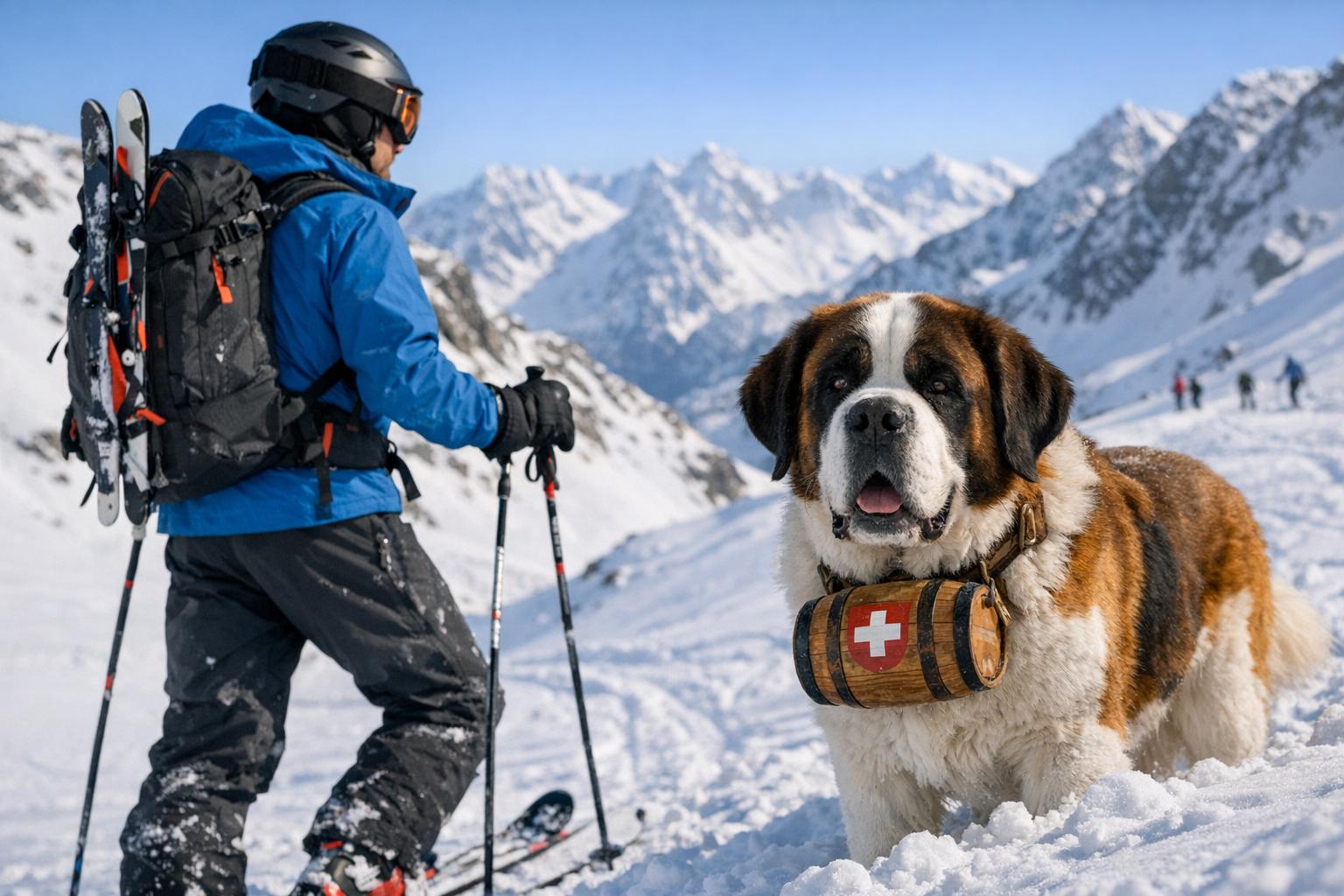
The Great St. Bernard Pass is much more than just a high mountain pass; it's a gateway to a unique adventure traversing the famous European Continental Divide. Here, ski expeditions offer a rare balance between unspoiled nature, ancient heritage, and sporting challenges. How can you fully enjoy this experience amidst snow-capped peaks and breathtaking panoramas?
Which routes should I choose for a ski tour around the Great St. Bernard Pass?
Around the Hospices of the Great St. Bernard Pass, there are numerous and varied options for ski touring. Located at an altitude of 2,472 meters, on the border between Switzerland and Italy, this pass is ideal terrain for ski touring. Three-day guided tours offer a star-shaped route, combining varied trails and technical descents with breathtaking views of peaks such as the Wildstrubel and other surrounding mountains.
Between sometimes demanding climbs, technical descents and stays in mountain huts, these routes guarantee a total immersion in the high mountains, with each day revealing a new horizon.
What are the best times of year for a 3-day trek in the Great St. Bernard Valley?
The best season for ski touring in the region is from January to April. January is characterized by often cold and powdery snow, while March and April benefit from more sunshine, although the snow can become more variable.
It is essential to check weather and snow reports before each departure, as conditions in the high mountains are highly variable. Several agencies offer itineraries between late January and early April, with conditions generally favorable for ski touring in the heart of winter.
What skill level is required for a mini ski touring trip around the Great St. Bernard Pass?
These 3-day mini-expeditions require a good level of ski touring skill, including the ability to navigate sometimes steep slopes and varied terrain. Prior ski touring experience and comfort in the mountains are recommended.
Beyond endurance, it's important to know how to handle your equipment and move safely in a demanding mountain environment. Guides adjust routes according to the group's level, but a reasonable level of fitness and good adaptation to snow, cold, and altitude conditions remain essential.
What equipment should I prepare for a ski tour in the Great St. Bernard region?
Essential equipment
- Lightweight ski touring with climbing skins
- Telescopic poles and helmet
- Avalanche transceiver (DVA), shovel and probe
- Technical, multi-layered clothing, suitable for cold and wet conditions
- Comfortable shoes suitable for several days
- Backpack including spare clothes, first aid kit, energy food
Practical advice
Guides often provide specific recommendations before each departure to adapt equipment to the current conditions.
Where to stay during a ski tour in the Great St. Bernard Pass?
The Great St. Bernard Hospice, a historic refuge dating back over a thousand years, serves as the main base for these routes. This place steeped in history offers a unique atmosphere to skiers and hikers.
In addition, several hotels in the valley offer comfort and rest after days of skiing, while some mountain refuges provide a more authentic and friendly experience, while guaranteeing safety and comfort.
What budget should be planned for a guided ski touring trip in the Great St. Bernard Valley?
Prices depend on the duration, type of accommodation, and level of supervision. A 3-day trek around the Hospices of the Great St. Bernard Pass generally costs between 400 and 600 euros per person, including the services of a high-mountain guide, some group equipment, and accommodation in a mountain hut or hotel.
Longer programs with hotel stays may be more expensive, but offer greater comfort and services. It is advisable to book well in advance, especially for the most popular winter periods.
What weather conditions are favorable for ski touring in the Great St. Bernard Pass?
A successful ski tour relies on stable weather and good snow conditions. Sunny days with little wind are ideal for ensuring visibility and enjoyment. Cool but moderate temperatures keep the snow firm and safe.
In the event of snowstorms or strong winds, progress becomes difficult. The guides regularly consult weather reports to adjust or postpone outings if necessary, in order to ensure the safety of the participants.
What safety precautions are implemented during raids around the Great St. Bernard Pass?
Safety is paramount during these high-mountain expeditions. The groups are led by qualified guides, who conduct frequent checks of safety equipment (avalanche transceiver, shovel, probe).
The routes are carefully chosen according to snow conditions and adapted daily. A precise understanding of avalanche risks and terrain is key. Groups are formed according to technical and physical ability to ensure a smooth and safe progression.
How to register for a guided ski tour in the Great St. Bernard Pass?
Registration is usually done through specialized websites or local agencies. It is recommended to book several weeks in advance, especially during peak season. Guides' and mountain centers' platforms detail the schedule, conditions, prices, and required equipment.
The pre-departure briefing is essential to prepare the group, check equipment, and review the latest conditions. Embarking on a trek in the Great St. Bernard Pass means fully experiencing a blend of sport, nature, and culture.
After the Great St. Bernard Pass: continuing the adventure on the European Continental Divide
After several days in the high mountains of the Great St. Bernard Pass, many wish to extend this adventure by exploring other stages of ski touring in Europe, such as the famous Haute Route Chamonix-Zermatt or the Cerces and Wildstrubel massifs.
Europe on the wireFollowing the European watershed, it offers a unique cross-border route combining skiing, mountain biking, trail running, and other activities. This true hydrological backbone connects diverse landscapes and multiple cultures, offering an immersive and enriching experience.
These routes offer a magnificent diversity of discoveries, always respecting nature, with the indispensable support of experienced guides.
Recent comments