
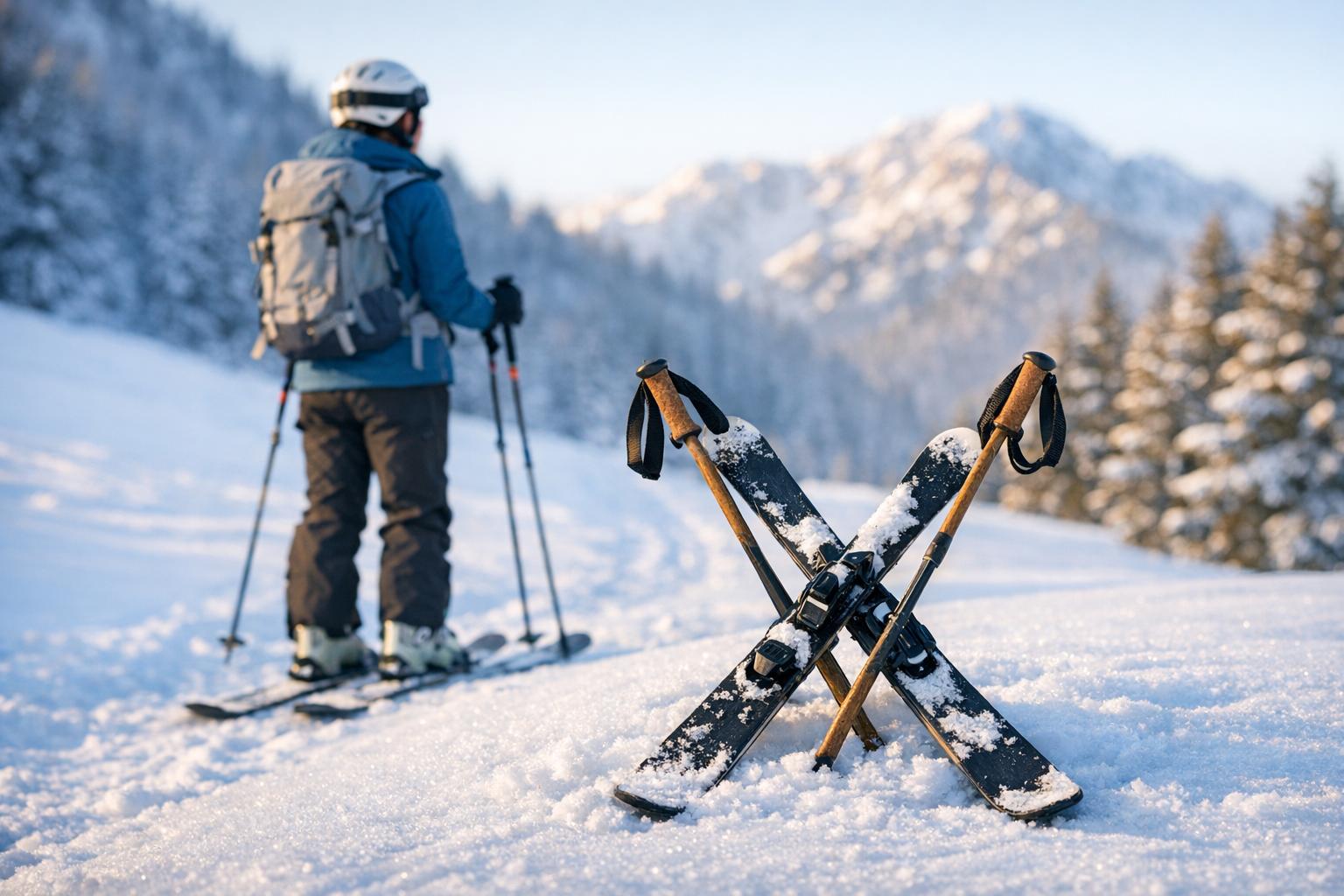
Have you ever skied, but never uphill? Do you dream of discovering wild panoramas, far from crowded slopes, while mastering an activity accessible to beginners? Ski touring offers this unique freedom, combining hiking, technique, and the pleasure of the mountains. With Europesurlefil , embark on your first adventure, respecting and exploring the natural spaces of the European Continental Divide. But how do you choose the right easy ski touring route for a successful first outing?
How to choose a ski touring route suitable for beginners?
The choice of route largely determines your enjoyment and safety. Opt for a route with manageable elevation gain, an easily accessible starting point , and safe conditions for both the ascent and descent. Marked trails in ski resorts or national parks offer a reassuring environment, which really helps you gain confidence in this new experience.
Mountain ranges like Haute-Savoie, Isère, and the Southern Alps are brimming with accessible and varied routes, where the snow conditions are good and the slopes remain gentle. For example, Verbier offers five marked routes in the Val de Bagnes, suitable for all levels, combining leisurely climbs with breathtaking panoramas. In Vars, you can explore over 15 kilometers of safe routes, perfect for mastering descents on groomed slopes at your own pace.
The level test: am I ready for my first ski tour?
Before you leave, ask yourself a few essential questions. Are you comfortable on alpine skis, even on groomed slopes? Have you ever tried cross-country skiing? Is your physical condition sufficient for a prolonged uphill effort? If most of these answers are yes, you already have a good foundation.
Alternatively, start with short outings with little elevation gain . This allows you to get used to the specific equipment, gradually manage the effort required, and master the descent on varied or groomed snow, in complete safety.
What are the essentials for starting ski touring?
To fully enjoy your time on the slopes, choosing the right equipment is key. Opt for lightweight, wide skis for good flotation on often variable snow conditions. Bindings should offer ease of movement on the ascent and security on the descent.
Climbing skins provide better grip on the ascent. Specific boots, flexible for climbing while ensuring support and control on the descent, are essential. Never forget a lightweight pack with a shovel, probe, and avalanche transceiver – this equipment is crucial, even for an easy route, since weather and conditions can change rapidly in the mountains.
Climbing and descending techniques: the basics to master
Ski touring uphill requires a steady pace, an efficient gliding stride, and well-placed footing to maintain balance on slopes. The kick turn, a technique for turning on narrow or steep sections, is a valuable skill to learn from the start.
Downhill skiing, while similar to alpine skiing, can vary in snow conditions: powder, groomed, or crusty. Attention is key to reading the slope, choosing your line, and making smooth turns. Controlling your speed prevents uncontrolled slides and ensures more enjoyment.
Hiking safely: how to assess conditions before setting off?
Before each outing, carefully consult the weather and snow reports. The weather (temperature, wind, risk of thunderstorms) and the stability of the snowpack can quickly transform a gentle hike into a dangerous challenge.
Avoid common mistakes: leaving too late, neglecting your equipment, or overestimating your abilities. Learn to recognize avalanche warning signs and, above all, avoid slopes steeper than 30° if the snowpack is unstable.
How to plan your first ski tour with complete peace of mind?
To begin, choose a marked, short route with minimal elevation gain . For example, the Saint-Gervais Mont-Blanc resort offers five suitable routes with elevation gains ranging from 369 to 555 meters, providing a perfect balance between exploration and technical development. La Plagne also offers a route between Les Coches and Plan Bois, an immersive experience in the heart of a natural forest, ideal for a gentle introduction to skiing.
Renting equipment on site greatly simplifies preparation, reducing logistical constraints for your first experience. It's always best to be accompanied, either by a group or a guide, to benefit from expert advice and share this new adventure in a friendly and safe environment.
Ski touring or cross-country skiing: how to choose?
Cross-country skiing is mainly practiced on groomed and relatively flat trails, while ski touring allows you to go further, exploring mountain ranges and wild slopes , often off-piste. Ski touring opens the door to an immersive experience, encountering unspoiled natural spaces and undertaking longer journeys, such as those highlighted by Europesurlefil and the European Continental Divide trail.
Cross-country skiing is more accessible in terms of equipment and physical effort, ideal for gentle endurance training. Ski touring, on the other hand, invites progressive adventure, with a technical dimension and a unique reward: reaching a summit to enjoy an unforgettable descent, off the beaten track.
Where can I find easy routes to get started?
Here are some accessible routes for beginners wishing to experience ski touring for the first time while discovering the rich landscapes along the European Continental Divide:
- Verbier (Switzerland) : five marked trails in the Val de Bagnes, suitable for all levels, with gentle climbs and exceptional views.
- Vars (Southern Alps) : more than 15 km of safe routes, descents on groomed slopes, perfect for a confident introduction.
- Saint-Gervais Mont-Blanc (Haute-Savoie) : five routes with a controlled elevation gain between 369 and 555 meters, combining beautiful scenery and technical progression.
These routes offer a safe environment and an authentic immersion in nature. They perfectly embody the philosophy of Europesurlefil, which promotes ski touring as an invitation to follow the hydraulic and natural backbone of Europe, while exploring cross-border territories rich in discoveries.

Recent comments