

Can you imagine hiking across turquoise lakes framed by rocky peaks, then descending into gorges where the water changes color at every turn? Slovenia offers exactly that. This small country, often overlooked in favor of its Alpine neighbors, boasts numerous remarkable hikes within a relatively small area. And that's precisely what makes it the ideal destination: everything is within easy reach.
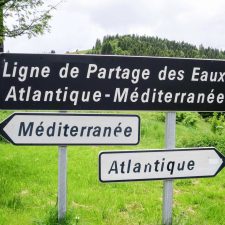
Slovenia occupies a key position on the European Continental Divide , the watershed that crosses 15 European countries. The Soča Valley, in particular, marks part of this legendary line, making it a major destination for cross-border hiking enthusiasts.
Why Slovenia attracts hikers
Slovenia offers approximately 10,000 kilometers of trails, from primeval forests to alpine peaks. Contrary to what one might think when looking at a map, Slovenia is not just a passage between Italy and Croatia: it is a destination in its own right for hiking.
The trails are well-marked, the distances are reasonable, and you can move from one ecosystem to another in a few hours' walk. Julian Alps , the Soča Valley with its emerald waters, mountain lakes, limestone gorges: each region offers a distinct style of hiking.
The must-sees: hikes that are truly worth the detour
Here are the essential itineraries for discovering Slovenia. Each one offers something unique, from the landscape to the cultural context.
Lake Bled and its timeless classics
Bled is a logical starting point for many. The lake is beautiful, but what changes everything is the hike to Ojstrica, the most photographed viewpoint in Slovenia.
The trail climbs gradually through the forest. The ascent takes approximately two hours from the start and remains moderate, accessible to most hikers in average physical condition. Upon arrival, you'll discover a breathtaking view overlooking the island in the lake, the church in the background, and the Julian Alps stretching to the horizon.
For a more challenging hike, continue on to Velika Osojnica and Mala Osojnica. This complete loop offers greater distance and elevation gain, with even more varied scenery. It's the option recommended by experienced hikers.
Velika Planina: the mountain shepherds' village
Velika Planina is the largest herding settlement in Central Europe, with documented historical occupation dating back several centuries. Hiking there is not just traversing a landscape: you are walking through Slovenian rural history.
The hike begins in Kamnik, a small town near Ljubljana. The trail climbs steadily without being steep. You gradually emerge above the tree line and discover an alpine plateau dotted with small, traditional wooden huts.
The trail features approximately 1,200 meters of elevation gain over an accessible distance. In summer, you can sample fresh cheese and milk produced locally directly from the shepherds. It's both a hiking experience and an immersion in Slovenian culture.
The Soča Valley: turquoise water and mountain trails
The Soča is a pristine alpine river, remarkable for its distinctive turquoise water. It contrasts with the limestone cliffs that frame it.
The Alpe Adria Trail , which connects Austria, Slovenia, and Italy, partly follows this valley. You don't have to hike the entire route to enjoy it: even sections of just a few days offer spectacular scenery and allow you to follow the European Continental Divide through three countries.
For something shorter, the Bovec loop is a moderate to intermediate-level route. You follow the river, the gorge closes in around you, and then you gradually climb. The elevation gain remains manageable for most hikers.
Triglav National Park: for ambitious hikers
Triglav, Slovenia's highest peak at 2,863 meters, attracts serious hikers. But the national park surrounding it offers many other trails that are less technical than climbing the summit itself.
Debela Peč, at approximately 2,000 meters above sea level, offers spectacular views of Triglav with a less strenuous climb than the summit. It's a popular option for hikers because of this: impressive alpine scenery without extreme physical exertion.
If you are in good physical condition and enjoy a challenge, consider a multi-day route in the park. The shelters along the trails make it doable even for those who aren't ultra-runners.
How to choose your next hike in Slovenia
With so many options, how do you decide? Here are the essential criteria.
Assess your physical condition honestly. Instead of saying "I do sports," ask yourself: "How many kilometers with elevation gain have I done recently?" Slovenian hikes vary enormously. Topol pri Medvodah near Ljubljana is an easy, about-one-hour walk suitable for beginners. At the other end of the spectrum, trekking through Triglav National Park over several days requires serious preparation.
Consider the season. June to September is the ideal time: dry trails, open mountain huts, and long days. Spring and autumn are magnificent, but some high-altitude trails can be snow-covered in May or muddy in October. In winter, options are more limited, but the Julian Alps offer remarkable solitude for experienced hikers.
Identify what you are really looking for. Lakes and panoramic views? Head to Bled and the Bohinj region. Culture and authenticity? Velika Planina. Emerald waters and gorges? Soča Valley. Physical challenge? Triglav National Park.
Practical conditions for successful hiking in Slovenia
Slovenian trails are generally well-maintained and marked with red and white blazes. Downloading an app like Komoot or AllTrails, or downloading GPX files before setting off, is always a good idea. The Slovenian mobile network works reasonably well, but in remote areas, it's best not to rely on it.
The best time to visit is from May to October. July and August are the hottest and busiest months. Mountain huts offer food and accommodation, which greatly simplifies long-distance routes. Distances from Ljubljana are short: Bled is a 2-hour drive away, and the Soča Valley is 3 hours away.
Be prepared for some humidity. Even in summer, mountain thunderstorms can arrive quickly. A good quality raincoat is a wise investment.
Important : Check the Triglav National Park regulations before your visit, including seasonal restrictions and protected areas. Hiking involves risks. Consult a local guide or the relevant authorities before setting out, and hike only to the best of your ability.
Beyond the classics: exploring differently
If you've already hiked in Bled several times, other trails are worth exploring. Nanos, a mountain between the Alps and the Mediterranean, offers a unique geographical perspective. Črni Kal, with its ruined fortress overlooking the Adriatic, combines history with stunning seascapes.
Rinka Slap waterfall in the Logar Valley is one of Slovenia's most beautiful waterfalls, less touristy than its more famous Alpine counterparts. The trails require more research and perhaps a car to reach, but offer a more authentic experience.
Prepare your hike in practical terms
Before setting off, make a detailed plan. Identify your exact route, note the elevation gain, estimated time, and final altitude. Download the GPX file or a PDF map.
Check recent notices: sometimes a trail is closed for maintenance, or a mountain hut hasn't opened as scheduled. Bring water (springs are scarce at altitude), a basic first-aid kit, a Swiss Army knife, and sunscreen.
Summer days are long: setting off early isn't mandatory, but it's excellent practice. Above all, walk at your own pace, take breaks, and observe the details. These trails have existed for decades, often centuries.
Recent comments