

You've seen a photo of a snow-covered mountain, or read about a traveler who crossed the Alps on foot, and ever since, the urge has been nagging at you. The idea of a real trek in Europe has been on your mind. But where do you begin when the continent offers hundreds of magnificent trails? How do you know which route truly matches your fitness level, your time, and your dreams?
That's exactly what we're going to explore together. Because choosing a trek in Europe isn't just about distance or difficulty, it's about finding the trip that speaks to you.
Why a trek in Europe rather than elsewhere?
The answer is simple: Europe boasts exceptional landscapes within relatively accessible distances, with infrastructure and history at every turn. Contrary to what one might think, you don't need to aim for the Himalayas to experience total immersion in the mountains.
A European trek is first and foremost a multi-day hike that allows you to truly immerse yourself in wild landscapes. It's also an opportunity to traverse diverse ecosystems: from the high mountains of the Alps to the moors of Scotland, from the peaks of Spain to the glaciers of Scandinavia.
The duration varies enormously. Some treks take 4 to 5 days, others require two, three weeks or more. The common thread? You hike, you sleep in a tent or in a mountain hut, you eat simple meals, and each day you discover something new. That's what a real trek is all about.
The classics: what are the most beautiful treks in Europe?
If you type “trekking Europe” into a search engine, you’ll find endless lists. Here’s what really comes up in the accounts of experienced travelers.
Tour of Mont Blanc This is the benchmark circuit. Approximately 170 kilometers, 10 to 12 days, three countries (France, Italy, Switzerland). The landscapes are breathtaking: glaciers, turquoise lakes, alpine meadows, and high mountain views from every angle. It's physically demanding, but the route is very well marked and there are plenty of mountain huts. The recommended period: June to September, with a peak in July and August.
Then there's the Kungsleden in Sweden . A legendary trail that crosses Swedish Lapland for approximately 450 kilometers. If you have three to four weeks and are looking for solitude, this is the trek for you. The landscapes are extreme: tundra, glacial lakes, and wild mountains. There are few mountain huts, but plenty of camping in the wilderness. September offers the best conditions.
In Scotland, the West Highland Way is an English-language classic. Less spectacular than the Alps, but magnificent in its ruggedness. 154 kilometers over 8 days, from the Lowlands to the Highlands, with picturesque villages where you can resupply. Perfect for a first multi-day hike.
For those who love the extreme, the Great Lofoten Traverse in Norway offers dramatic landscapes: rocky peaks plunging into the sea, colorful fishing villages, and Arctic light. It's short (a few days) but intense both physically and emotionally.
Don't overlook the High Tatras trek in Slovakia. It's less well-known than the Alps, but just as beautiful. Well-maintained trails, alpine huts, and truly accessible mountains await. How long does it take? 7 to 10 days, depending on your itinerary.
In France, the Grande Traversée du Vercors or the Tour des Pics d'Europe in Spain offer less touristy but equally memorable alternatives.
Choosing a trek that matches your level: honestly, what's your limit?
That's the question no one really dares to ask. Because we've all heard about the guy who did the Kungsleden on flip-flops, or the grandmother who climbed Mont Blanc. But those aren't the usual cases.
Let's face it. A trek requires three things: a minimum level of physical fitness, mental preparation, and the right equipment.
To beginLook for a 5- to 7-day trek with 4 to 6 hours of walking per day. The West Highland Way or the Tour du Mont Blanc (the shorter version, just the French section) are ideal. Altitude isn't the main issue; it's the cumulative distance and the constant elevation changes.
For an intermediate levelAim for 8 to 12 days, 6 to 8 hours of walking per day, with altitudes between 2000 and 2500 meters. This is where most of the beautiful treks in Europe are located: the complete circuit of Mont Blanc, the crossing of the Tatra Mountains, the entire West Highland Way.
According to the expertIt's beyond that. Several weeks, extreme conditions, nights in the mountains, total self-sufficiency. The Kungsleden is for those people.
A very practical tip: test yourself first on a short trek. Three days on a marked trail with a backpack will teach you more about your actual ability than any theoretical reflection.
The best time to go: when the weather is really cooperating.
Timing is non-negotiable. Leaving at the wrong time will ruin the trip and take unnecessary risks.
In the high mountains (Alps, Pyrenees, Tatras), the best time to go is from June to September. Before June, there's still too much snow and not all the mountain huts are open. After September, the days get shorter quickly and the weather becomes unsettled. July and August are peak tourist season: crowded trails, full huts, and higher prices. June and September offer a good balance.
In Scandinavia, September is truly the best time to visit. Summer (July-August) brings the inevitable swarms of mosquitoes. September is quieter, the nights begin to get dark (so prepare yourself mentally), and the autumn colors arrive.
In Scotland and Great Britain, May to September is the ideal time to visit. May and June offer the longest days, while May to September has the best weather. October can be beautiful, but beware of storms.
How to prepare practically so as not to give up on day 2
Honest advice: equipment matters. It accounts for 30% of success. But physical preparation accounts for 70%.
Physical training Start three months before your trek. Two to three times a week. Hike uphill with a backpack (even an empty one at first), and do long walks on the weekend. If possible, do a test trek of two to three days three weeks before your big departure. This will show you what hurts, what doesn't work with your gear, and it will give you confidence.
Essential equipment : a good backpack (55 to 65 liters for a long distance), broken-in shoes, layered clothing (never cotton), a lightweight tent, a sleeping bag suitable for the season, and an external battery for your phone.
Nutrition and hydration Don't discover how your stomach reacts to dehydrated food while trekking. Test your rations over the weekend. Drink regularly. Real fatigue is often just dehydration.
Mental aspect Accept in advance that the first three days will be tough. Your body will protest, your feet will ache, you'll doubt yourself. That's normal. By day four, it's magical. You've found your rhythm. You have nothing to distract you but the walking and the scenery. That's when the beautiful treks of Europe truly speak to you.
Europesurlefil: another vision of trekking Europe
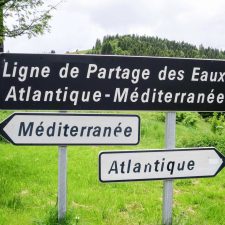
If you start to look seriously, you'll discover that there's a different perspective on trekking in Europe. Europesurlefil , the European Continental Divide trail, offers a vision that goes beyond simply "doing a well-known trek." It's about following the European watershed across several countries, understanding how rivers, mountains, and cultures truly intertwine across the continent.
It's not just a trail. It's a journey that tells you about Europe in a different way. It's also proof that trekking in Europe can be explored far beyond the usual tourist routes. If you start with Mont Blanc or the Kungsleden, you'll have the foundation. But Europesurlefil represents the next step: the one where you already know how to hike in the mountains and are looking for a true cross-border immersion.
Your next steps
Let's recap. You now have an idea of what a European trek is, the options that exist, your true level, and how to prepare without making mistakes.
Before booking anything, ask yourself these three questions: How many days can I realistically take? What type of landscape appeals to me most (high mountains, wilderness, small villages)? Am I capable of walking 6 hours a day without collapsing?
The answers will naturally guide you towards your trek.
Recent comments